




menu

Sewer Line Repair & Replacement in Detroit – Complete Diagnosis to Final Restoration

From camera inspection to trenchless pipe replacement, Ironwood Plumbing Detroit handles main sewer line failures with precision methods that preserve your property and restore drainage fast.

Slider Image 1
Slider Image 2
Slider Image 3
Slider Image 4
Slider Image 5
Slider Image 7
Slider Image 8
Slider Image 9
Slider Image 10
Slider Image 11

Why Detroit Homes Face Chronic Sewer Line Problems

Detroit sits on dense clay soil that expands when wet and contracts during dry spells. This constant ground movement creates uneven pressure on buried sewer laterals, leading to cracks, separations, and full pipe collapse over time. When you add the fact that many Detroit homes were built between 1920 and 1960, you are dealing with cast iron and clay pipe that has exceeded its useful life by decades.

Tree roots follow moisture. The older sewer pipes develop hairline cracks from soil shifting, and roots infiltrate those openings aggressively. What starts as slow drainage becomes a complete blockage in months. You may notice gurgling toilets, wet spots in your yard near the foundation, or sewage backing up into your basement floor drain during heavy rain.

Detroit's combined sewer system in many older neighborhoods means that when your main sewer line fails, contaminated water does not just stay in your yard. It can back up into your living space during storm events. Broken sewer pipe repair is not optional when you face health risks and property damage. Trenchless sewer line repair methods allow us to fix collapsed sections without excavating your entire front lawn, saving mature trees and driveways in the process.

A sewer lateral replacement is a significant project, but addressing it before total failure prevents emergency backups and limits the scope of work. Sewer pipe replacement using modern HDPE or PVC materials eliminates root intrusion and resists Detroit's freeze-thaw cycles for 50 years or more.

Why Detroit Homes Face Chronic Sewer Line Problems
How We Diagnose and Repair Failed Sewer Lines

How We Diagnose and Repair Failed Sewer Lines

We start every main sewer line repair with a video camera inspection. A high-definition camera mounted on a flexible cable travels through your cleanout and records the interior condition of your pipe. We identify exact failure points, measure the depth and distance from the foundation, and determine whether roots, bellies, offset joints, or full collapse caused the problem.

If the damage is localized to one section and the remaining pipe is structurally sound, trenchless sewer line repair using pipe bursting or slip lining is the most efficient solution. Pipe bursting fragments the old pipe while simultaneously pulling a new HDPE pipe into place. Slip lining inserts a smaller diameter pipe inside the existing damaged line and seals it with epoxy resin. Both methods require minimal excavation, usually just access pits at two points.

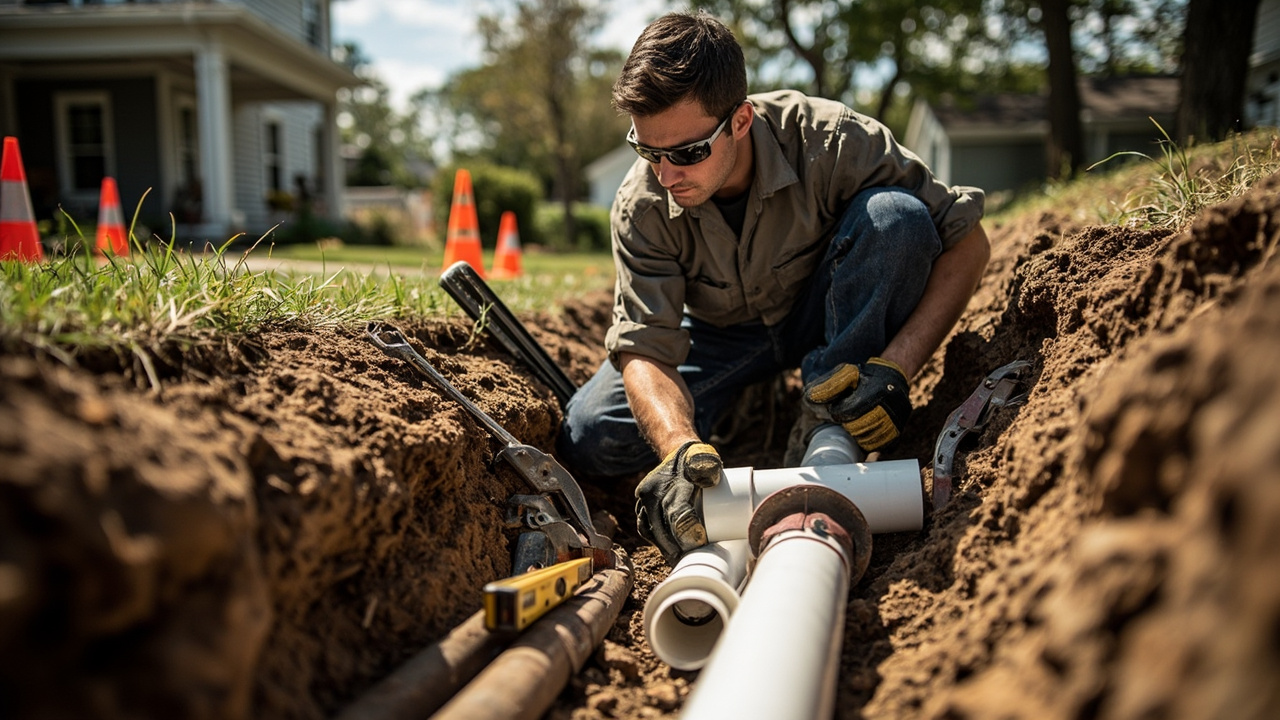
When the entire lateral is compromised, full sewer pipe replacement is necessary. We excavate a trench from your foundation to the city connection point, remove the old pipe, and install schedule 40 PVC or HDPE pipe on a properly compacted gravel bed with correct slope. We use laser levels to ensure a minimum 2 percent grade so waste flows efficiently without creating bellies where solids settle.

For broken sewer pipe repair caused by a single crack or joint separation, we may excavate only the damaged section and splice in a new segment using fernco couplings or solvent weld connections, depending on pipe material. Every repair includes pressure testing or water testing to confirm the integrity of the new installation before we backfill and restore your landscaping.

What Happens During Your Sewer Line Repair

Sewer Line Repair & Replacement in Detroit – Complete Diagnosis to Final Restoration
01

Camera Inspection and Diagnosis

We insert a waterproof camera through your cleanout access and record the entire length of your sewer lateral. You watch the footage with us in real time. We identify root masses, cracks, offset joints, bellies, and collapsed sections. The camera has a locator beacon that transmits depth and position data so we know exactly where to dig if excavation is required for that segment.
02

Repair Method Selection

Based on the camera findings, we recommend trenchless pipe bursting if the existing pipe can be fractured and replaced in place, or traditional excavation if the lateral is too shallow, too deep, or obstructed by other utilities. We explain the scope, access points, equipment staging, and timeline for your specific situation. You approve the plan before we begin work.
03

Installation and System Testing

We complete the pipe installation using the selected method, backfill all excavations with compacted fill, and run a final camera inspection to document the finished work. We flush the system and run water through every fixture to confirm drainage is restored. You receive before and after video footage and a diagram showing the repair locations and new pipe specifications for your records.

Why Detroit Property Owners Choose Ironwood Plumbing Detroit for Sewer Work

Sewer line failures do not wait for convenient timing. We respond to broken sewer pipe emergencies across Detroit, from the Jefferson Chalmers historic district to the Rosedale Park neighborhoods, and we understand the construction quirks of homes built in different eras. Homes near the Detroit River or along the Jefferson corridor often have shallow laterals due to high water tables, requiring specialized excavation techniques to avoid trench collapse.

Detroit's permit process for sewer work requires coordination with the Detroit Water and Sewerage Department, especially when tying into the public main. We handle permit applications, inspection scheduling, and final approval so you do not navigate city bureaucracy alone. We know which neighborhoods still have combined sewers versus separated systems, and that knowledge affects how we design repairs to prevent future backups during heavy rain.

Our camera equipment is commercial grade with accurate depth and location tracking. We do not guess where your pipe failed. We document the exact problem and show you the evidence before we propose a solution. When we recommend sewer pipe replacement over a patch repair, it is because the existing pipe has reached the end of its functional life and temporary fixes will fail again within months.

We use trenchless methods whenever the site conditions allow it because Detroit homeowners value mature trees, established landscaping, and intact driveways. Pipe bursting and slip lining reduce disruption, shorten project timelines, and cost less than full excavation in many scenarios. When excavation is necessary, we restore your property to pre-work condition, including reseeding grass and grading for proper drainage away from your foundation.

What to Expect When You Call for Sewer Line Service

Response Time and Availability

We schedule camera inspections within 24 hours of your call for non-emergency situations. If you have active sewage backup into your home, we dispatch a technician immediately to assess the situation and determine if the blockage is in your lateral or the city main. Emergency sewer repairs begin the same day when the failure creates a health hazard or prevents you from using your plumbing. Standard sewer line replacements are scheduled within three to five business days after you approve the estimate, depending on permit approval timelines and equipment availability.

Initial Inspection Process

The camera inspection takes 30 to 60 minutes depending on the length of your lateral and the severity of blockages. We locate your cleanout, which is typically a white or black PVC cap in your basement floor or outside near the foundation. If no cleanout exists, we may need to pull a toilet to access the drain line. You watch the video feed as we advance the camera, and we pause to explain what you are seeing at each problem area. You receive a written report with still images, repair recommendations, and a detailed cost estimate before any work begins.

Quality of the Completed Work

Every sewer line repair meets or exceeds Detroit building codes for pipe material, slope, depth, and bedding. We install schedule 40 PVC or HDPE pipe rated for underground use with proper joint connections that resist root intrusion. Trenchless installations using pipe bursting create a seamless, jointless line that eliminates weak points. All excavations are backfilled with compacted granular fill in six-inch lifts to prevent settling. We restore landscaping, reseed disturbed areas, and rake your yard to match surrounding grade. You receive video documentation of the finished pipe interior showing smooth flow and no defects.

Post-Repair Support

We provide written care instructions for your new sewer line, including guidance on safe drain cleaning practices and root control treatments if trees are present near the lateral path. While we do not advertise specific warranty terms, we stand behind the quality of our installations and address any defects in materials or workmanship promptly. We recommend annual camera inspections if your property has mature trees with aggressive root systems. If you experience slow drainage or recurring backups after a repair, we return to diagnose the issue at no additional diagnostic charge within the first 90 days.

Frequently Asked Questions

You Have Questions,
We Have Answers

Does homeowners insurance cover main sewer line replacement? +

Most standard homeowners insurance policies do not cover main sewer line replacement. Typical policies exclude damage from wear, tear, or deterioration. However, sudden and accidental damage, like a tree root intrusion that causes a pipe burst, may qualify for partial coverage. Some insurers offer optional sewer backup endorsements or riders for additional protection. In Detroit, where aging clay pipes and freeze-thaw cycles are common, review your policy carefully. Document damage immediately with photos and a professional inspection report. Contact your insurer before starting repairs to confirm what qualifies under your specific coverage terms.

What is the cheapest way to replace a sewer line? +

Trenchless pipe lining is often the most cost-effective replacement method. This technique inserts an epoxy-coated liner inside the damaged pipe, creating a new pipe within the old one without extensive excavation. You avoid landscape restoration, driveway tear-up, and labor-intensive digging. In Detroit, where clay soil and mature trees complicate traditional dig projects, trenchless saves time and money. Spot repairs for isolated damage also cost less than full replacement. Get a camera inspection first to identify the exact problem area. Avoid fly-by-night contractors offering suspiciously low bids. Quality work prevents expensive callbacks and future failures.

Can a homeowner replace a sewer line? +

A homeowner can legally replace a sewer line in Detroit, but it is not advisable. Municipal codes require permits, inspections, and compliance with specific depth, slope, and material standards. You must locate the city connection point and avoid damaging adjacent utilities. Excavation risks include cave-ins, utility strikes, and improper backfill leading to future settling. Detroit requires licensed plumbers for most sewer work to protect public health. Incorrect installation voids permits and complicates future home sales. DIY mistakes often cost more to fix than hiring a professional from the start. Leave sewer line work to licensed experts.

How to get insurance to pay for sewer line replacement? +

To get insurance to pay for sewer line replacement, document everything immediately. Take photos and videos of the damage, including water backup or flooding. Contact a licensed plumber for a camera inspection and detailed report identifying the cause. File your claim promptly and provide all documentation, including receipts and the inspection report. Emphasize sudden or accidental damage rather than gradual deterioration. In Detroit, highlight damage from freeze-thaw cycles or sudden root intrusion if applicable. Consider hiring a public adjuster if your claim is denied. Review your policy for optional sewer backup coverage before damage occurs.

What is the average lifespan of a sewer line? +

Sewer line lifespan depends on material. Cast iron pipes last 50 to 65 years but corrode over time. Clay pipes, common in older Detroit neighborhoods, last 50 to 60 years but crack easily from shifting soil and tree roots. Orangeburg pipes, used mid-century, fail after 30 to 50 years. Modern PVC pipes last over 100 years with proper installation. Detroit homes built before 1970 likely need inspection or replacement soon. Freeze-thaw cycles and clay soil accelerate deterioration. Schedule a camera inspection if your home is over 40 years old to catch problems early.

Who is responsible for a broken sewer pipe? +

Responsibility for a broken sewer pipe depends on where the break occurs. Homeowners own the lateral line from the house to the property line or city connection point. The city owns the main sewer line in the street. In Detroit, the property owner is responsible for repairs up to the public right-of-way. If tree roots from a city-owned tree damage your lateral, you may dispute liability, but most homeowners still pay. Always confirm the break location with a camera inspection before starting repairs. Contact Detroit Water and Sewerage Department if you suspect the main line is damaged.

What happens if a sewer line breaks under your house? +

A sewer line break under your house causes immediate and severe damage. Raw sewage floods your crawl space or basement, creating health hazards from bacteria and pathogens. Structural damage occurs as moisture weakens foundation walls and wooden supports. Mold grows rapidly in damp conditions. In Detroit, where many homes have basements, this risk is significant. You must evacuate immediately and call a licensed plumber for emergency repairs. Avoid DIY fixes. Professional crews use excavation or trenchless methods to access and replace the damaged section. Remediation includes sewage cleanup, disinfection, and moisture control to prevent long-term structural issues.

How often does a sewer line need to be replaced? +

Sewer lines do not require replacement on a set schedule. Replacement becomes necessary when damage, blockages, or deterioration occur. Clay and cast iron pipes in Detroit homes over 50 years old often need replacement due to corrosion, root intrusion, or freeze-thaw cracking. Schedule a camera inspection every 5 to 10 years if your home is older. Watch for warning signs like frequent backups, slow drains, or soggy yard patches. Modern PVC lines rarely need replacement if installed correctly. Proactive inspection catches problems before catastrophic failure, saving you from emergency repairs and water damage.

Why is sewer line replacement so expensive? +

Sewer line replacement costs reflect labor intensity, materials, permits, and site conditions. Excavation requires heavy machinery, skilled operators, and disposal of contaminated soil. In Detroit, clay soil and frost lines at 42 inches add complexity. Permits and inspections ensure code compliance. Trenchless methods reduce costs but still require specialized equipment and expertise. Landscape restoration, driveway removal, and tree root management increase expenses. Material choice matters. PVC is affordable, but cast iron costs more. Emergency repairs cost extra for after-hours labor. Cheap work leads to future failures. Quality installation protects your home and investment long-term.

What are four signs that your sewer line is broken? +

Four signs of a broken sewer line include frequent drain backups, especially in lower-level fixtures like basement toilets. Slow drains throughout the house indicate a mainline blockage. Foul sewage odors in your yard or home signal leaking waste. Soggy patches or unusually green grass in your yard show wastewater pooling underground. In Detroit, watch for foundation cracks or settling, as leaking lines erode soil. You may also notice rodents or insects attracted to the leak. If you see multiple signs, schedule a camera inspection immediately. Early detection prevents catastrophic failures and expensive emergency repairs.

How Detroit's Clay Soil and Aging Infrastructure Drive Sewer Line Failures

Detroit is built on expansive clay soil that shrinks during dry summer months and swells when saturated by rain or snowmelt. This seasonal movement places constant stress on rigid sewer pipes, causing cracks at joints and creating bellies where pipe sections sag. The problem intensifies in older neighborhoods like Indian Village, Boston-Edison, and Grandmont Rosedale, where cast iron and clay pipe installed in the 1920s and 1930s has become brittle with age. When you combine soil movement with corroded pipe, main sewer line repair becomes unavoidable for properties over 70 years old.

Detroit's municipal sewer system is among the oldest in the country, and many residential laterals tie into brick mains that predate modern standards. Ironwood Plumbing Detroit works directly with the Detroit Water and Sewerage Department to coordinate connection point repairs and ensure compliance with current lateral replacement codes. Our familiarity with Detroit's permit process, inspection requirements, and utility locate procedures means your project moves forward without delays. Choosing a plumbing contractor who understands Detroit's infrastructure prevents costly mistakes and ensures your new sewer line meets city specifications for depth, material, and connection methods.
Plumbing Services in The Detroit Area

Ironwood Plumbing proudly serves Detroit and the surrounding areas with reliable, professional plumbing solutions. Whether you’re a homeowner or a business owner, you can count on our fast response times and expert service. Use the map below to find our office or check if your location is within our service radius. We’re easy to reach and always happy to help — just call, click, or visit us today to schedule your plumbing service with a local team that truly cares.

Address:
Ironwood Plumbing Detroit, 3200 Greenfield Rd, Detroit, MI, 48120

Additional Services We Offer

Our news updates

Latest Articles & News from The Blogs

Plumbing Requirements for Luxury Body Jets and Rain Showerheads in West Bloomfield High-end luxury shower systems in West Bloomfield demand…

Plumbing Requirements for Luxury Body Jets and Rain Showerheads in West Bloomfield

Plumbing Requirements for Luxury Body Jets and Rain Showerheads in West Bloomfield High-end luxury shower systems in West Bloomfield demand…

The Truth About Septic Tank Additives and Why They Might Not Save You a Pump-Out in Brighton

The Truth About Septic Tank Additives and Why They Might Not Save You a Pump-Out in Brighton Walk into any…

How to Choose the Right Horsepower for Your Next Dearborn Garbage Disposal

Understanding Garbage Disposal HP: Why It Matters The right garbage disposal horsepower directly affects how quickly and thoroughly your kitchen…

Contact Us

Do not wait for a basement backup to force an emergency repair. Call Ironwood Plumbing Detroit at (313) 572-4144 to schedule a video inspection and get a clear diagnosis of your sewer line condition before failure happens.