




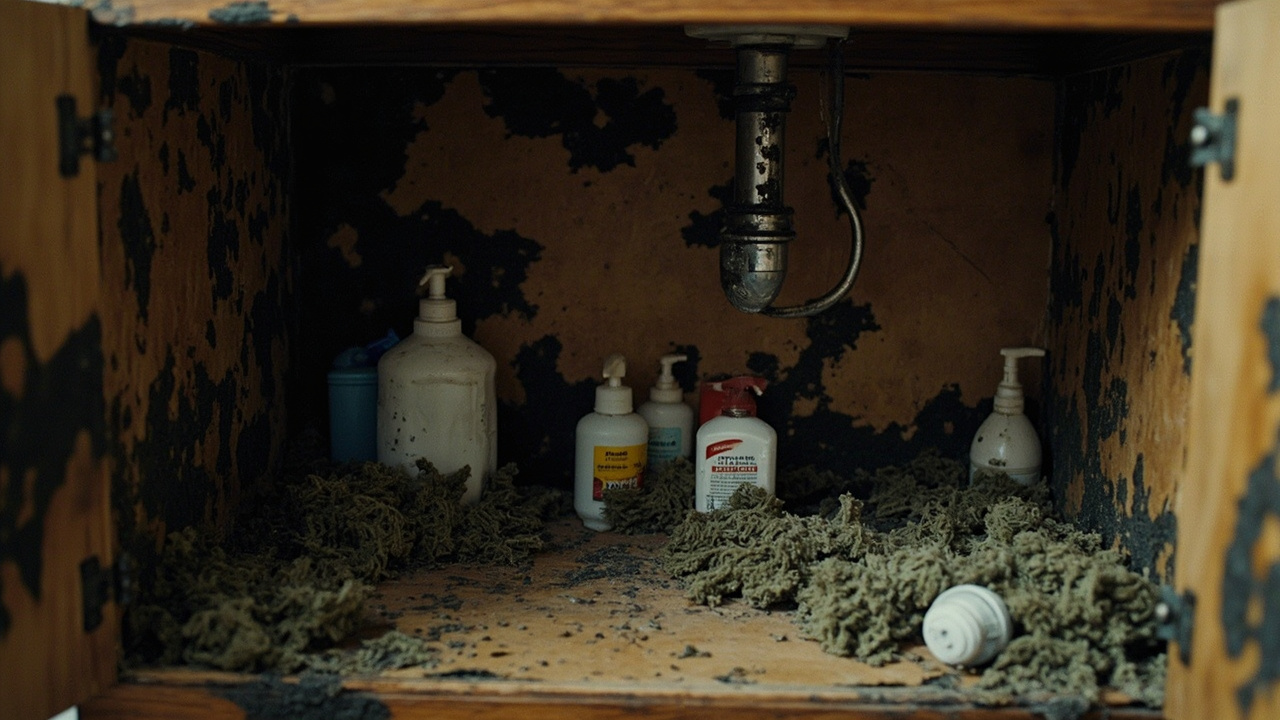
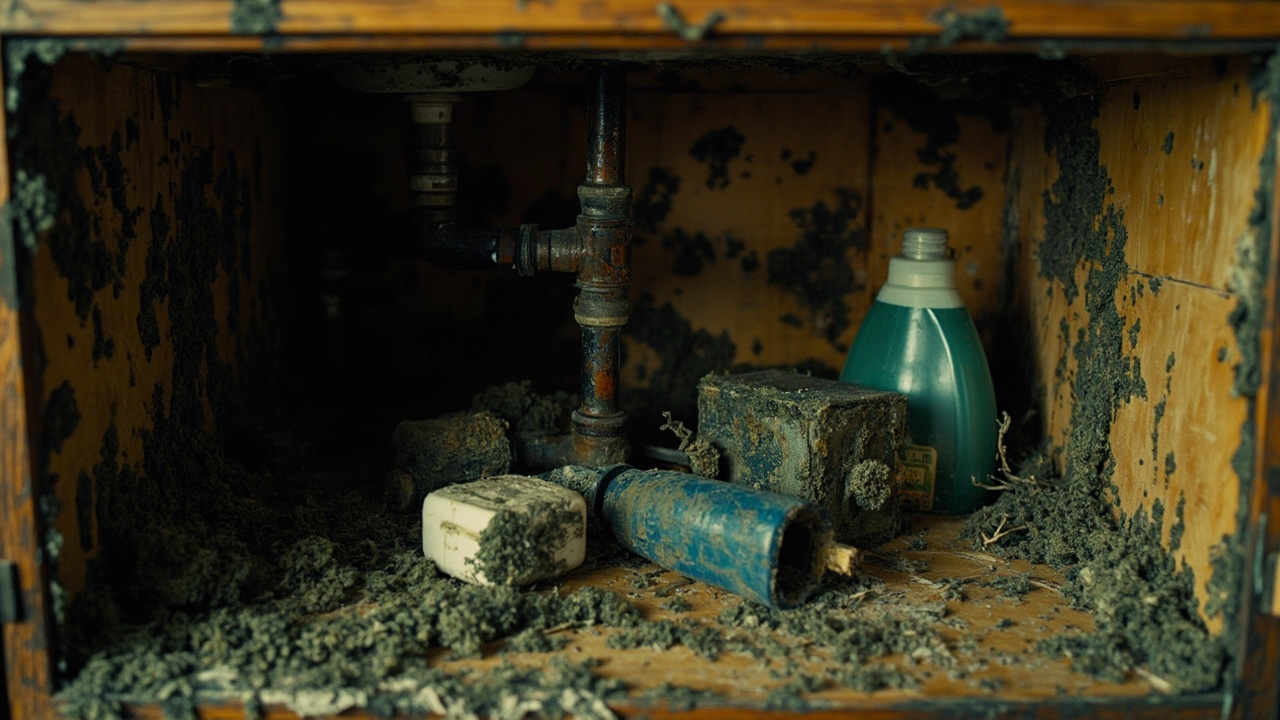

Detroit winters are brutal on plumbing. When temperatures drop below freezing, water inside pipes expands, stressing joints and fittings. When it thaws, those stressed connections weep. Over multiple freeze-thaw cycles, a perfectly sealed supply line or trap adapter develops micro-cracks that drip intermittently. You don't see a puddle. You see mold growth inside vanity cabinets six months later. This cycle is especially damaging in older homes where plumbing runs through exterior walls or unheated crawlspaces. The seasonal stress compounds year after year until a fitting finally fails.
Detroit's housing stock includes thousands of homes built before 1960, many with original cast iron drain stacks and galvanized supply lines. These materials corrode from the inside out, creating pinhole leaks that are invisible until mold appears. Local plumbers who understand this aging infrastructure know where to look. We've worked in enough Detroit bathrooms to recognize the warning signs: rust stains on cabinet floors, mineral deposits around fittings, or sewer odors that indicate failed trap seals. Choosing a plumber familiar with Detroit's plumbing history means faster diagnosis and correct repairs the first time.