




menu

Commercial Sewer Line Repair in Detroit – Industrial-Grade Solutions That Keep Your Business Operating

When your commercial sewer line fails, every hour of downtime costs you revenue and reputation. Ironwood Plumbing Detroit delivers rapid diagnosis, code-compliant repairs, and minimal disruption to your operations across the greater Detroit metro.

Slider Image 1
Slider Image 2
Slider Image 3
Slider Image 4
Slider Image 5
Slider Image 7
Slider Image 8
Slider Image 9
Slider Image 10
Slider Image 11

Why Detroit Commercial Properties Face Recurring Sewer Line Failures

Detroit's aging infrastructure creates a perfect storm for commercial sewer failures. The freeze-thaw cycles here are relentless. When temperatures swing 40 degrees in a week, cast iron pipes that have served industrial buildings since the 1950s crack under the stress. Add in the city's clay soil composition, which shifts dramatically with seasonal moisture changes, and you get persistent joint separation in business sewer line systems.

Commercial facilities in the Corktown and Eastern Market districts face another challenge. Many buildings were constructed before modern plumbing codes existed. The original sewer mains were sized for different usage patterns. A restaurant that now serves 300 customers daily is pushing wastewater through pipes designed for 50-person capacity. The result is chronic backups, root intrusion at weak points, and eventual pipe collapse.

Industrial sewer line repair demands increase when businesses ignore early warning signs. Slow drains in back-of-house areas signal reduced flow capacity. Sewage odors near floor drains indicate venting problems or partial blockages. By the time wastewater backs up into your facility, you are looking at emergency commercial sewer repair services, health code violations, and potential closure orders from Wayne County health inspectors.

The commercial sewer pipe repair work we complete in Detroit is not just about fixing the immediate break. We assess why the failure happened. Was it root intrusion from the maples lining your parking lot? Was it grease accumulation from inadequate trap maintenance? Was it simply a 70-year-old pipe that reached end of life? Understanding the cause determines whether you need spot repair or full commercial sewer main repair.

Why Detroit Commercial Properties Face Recurring Sewer Line Failures
How We Approach Commercial Sewer Main Repair in Detroit

How We Approach Commercial Sewer Main Repair in Detroit

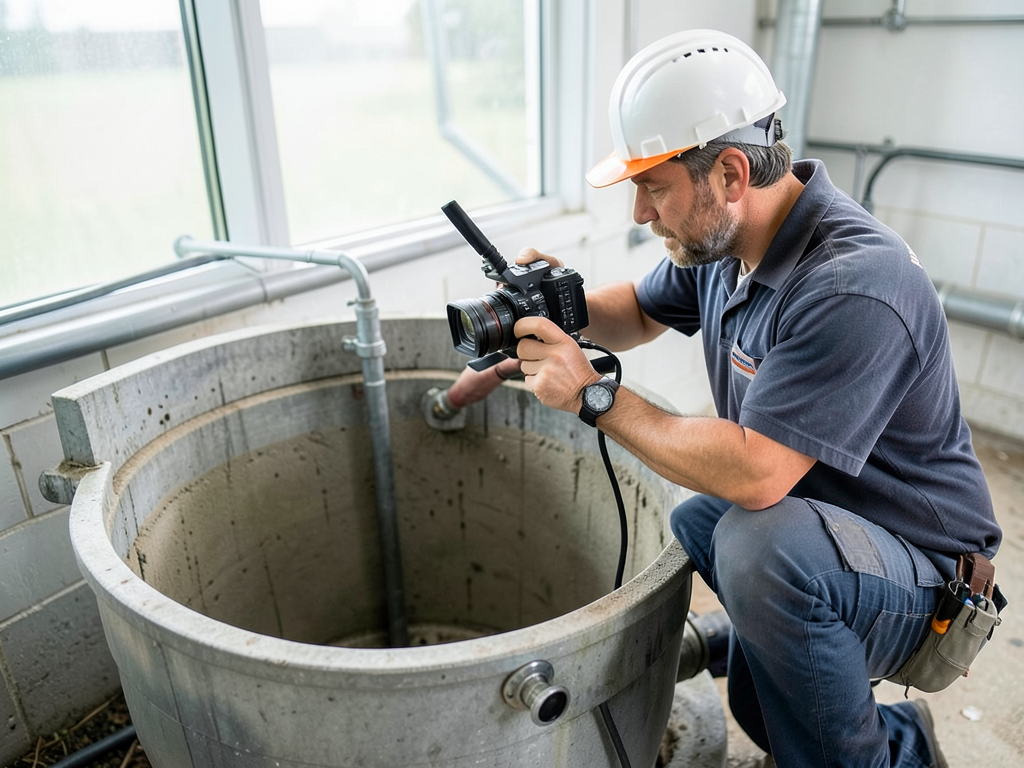
Every commercial sewer repair project starts with camera inspection. We do not dig blind. Our high-definition pipeline cameras map the entire run from your building to the city connection. We identify the failure point, measure remaining wall thickness in adjacent sections, and document any secondary issues like offset joints or bellied pipe sections.

For most business sewer line repair jobs in Detroit, we recommend trenchless methods when feasible. Pipe bursting allows us to replace your sewer main without excavating your entire parking lot. We pull a bursting head through the old pipe, fracturing it outward while simultaneously pulling new HDPE pipe into place. Your customers never know major infrastructure work is happening. Your operations continue with minimal interruption.

When traditional excavation is necessary, we work in phases. We isolate the damaged section, install temporary bypass pumping to maintain your facility operations, then complete the repair during your lowest-traffic hours. For a restaurant, that means working between 2 AM and 8 AM. For a manufacturing plant, that means coordinating around your production schedule.

Industrial sewer line repair often involves upgrading capacity during the fix. If your current 6-inch main is undersized for your actual usage, we discuss stepping up to 8-inch pipe. If your building has expanded but your sewer infrastructure has not, we calculate the additional capacity needed and spec the appropriate materials. This is not upselling. This is engineering the correct solution so you are not calling us back in 18 months.

We coordinate all permit requirements with Detroit's Buildings, Safety Engineering and Environmental Department. Commercial sewer repair services require proper permits, inspections at multiple stages, and final approval before we backfill. We handle that entire process. You focus on your business. We focus on getting your wastewater system back to full function.

What Happens During Your Commercial Sewer Repair Project

Commercial Sewer Line Repair in Detroit – Industrial-Grade Solutions That Keep Your Business Operating
01

Emergency Assessment and Bypass

We arrive within two hours of your call. First priority is stopping any active flooding and establishing temporary wastewater handling. We deploy bypass pumping equipment to route sewage around the failed section, allowing your facility to resume operations while we diagnose the problem. Our camera inspection pinpoints the exact failure location, documents the pipe condition, and determines whether you need spot repair or full line replacement.
02

Repair Execution and Testing

We execute the repair using the method that minimizes your downtime. Trenchless pipe bursting replaces the line without destroying your landscaping or pavement. Traditional excavation gives us access to repair specific sections. We install new pipe to current code specifications, ensuring proper slope and secure joints. Before backfilling, we run flow tests and camera verification to confirm the repair meets performance standards and will pass city inspection.
03

Site Restoration and Documentation

After final inspection approval from Detroit's Building Department, we restore your property to original condition. Asphalt gets repaved, concrete gets repoured, and landscaping gets replanted. You receive complete documentation including camera footage of the completed repair, permit closure confirmation, and a detailed map showing the new pipe location. This documentation protects you during future property transactions and helps prevent accidental damage during other utility work.

Why Detroit Businesses Choose Ironwood Plumbing for Sewer Infrastructure

Commercial sewer failures do not wait for convenient timing. When a main line collapses on Saturday morning, you need a crew that responds immediately with industrial-grade equipment. We maintain dedicated commercial response capacity. Our trucks carry bypass pumps rated for 200 GPM flow. Our camera systems handle pipes from 4 inches to 36 inches. We do not show up to a commercial job with residential tools.

Detroit's commercial plumbing codes are specific about materials, installation methods, and inspection requirements. The 2015 Michigan Plumbing Code, as adopted by Detroit, mandates certain pipe materials for commercial applications. We know which materials the city accepts for underground installation. We know the required inspection points. We schedule inspections at the correct phases so your project does not stall waiting for approval.

Our experience with Detroit's infrastructure gives you an advantage. We know that buildings east of Woodward Avenue often have combined sewer systems where your wastewater shares pipes with storm drainage. We know that facilities near the Detroit River face higher water table challenges during spring. We know that properties in the New Center area often have multiple sewer connections from previous building configurations. This local knowledge prevents surprises mid-project.

The commercial clients we serve in Detroit include restaurants in Greektown, manufacturing facilities in the I-94 Industrial Corridor, medical offices in the Detroit Medical Center area, and retail spaces in Midtown. Each facility type has different wastewater characteristics and different tolerance for downtime. A hospital cannot shut down for three days. A restaurant cannot lose weekend service. We plan every commercial sewer repair project around your operational requirements, not our convenience.

When you need business sewer line repair, you need a contractor who understands that downtime equals lost revenue. We provide realistic timelines, we staff appropriately to meet those timelines, and we communicate proactively when conditions change.

What Your Business Can Expect During Commercial Sewer Repair

Response Time and Project Duration

Emergency commercial calls get two-hour response. We arrive with diagnostic equipment and temporary bypass capability so your facility can continue operating during assessment. Most single-point repairs complete in 24 to 48 hours including permit processing and inspection. Full line replacements requiring excavation take three to five days depending on pipe length and site access. Trenchless replacements often complete in one to two days. We provide daily progress updates and adjust crew size to meet your deadline requirements when possible.

Initial Diagnosis and Repair Planning

Camera inspection gives us complete visibility into your sewer system condition. We document pipe material, diameter, slope, and the specific failure mode. You receive a detailed report with video footage, still images of problem areas, and our recommended repair approach. We explain the differences between repair options including cost implications, timeline impacts, and long-term durability. For complex projects involving capacity upgrades or rerouting, we provide engineered drawings and specifications. You make informed decisions based on complete information, not sales pressure.

Quality of Completed Work

Commercial sewer repairs must perform under sustained heavy usage. We install Schedule 40 PVC or HDPE pipe rated for commercial loads. Joints get proper bedding and support to prevent settling. Cleanout access gets installed at code-required intervals so future maintenance does not require excavation. Every repair passes city inspection on first submission. Before we leave your site, you receive camera documentation showing the completed installation, proper flow, and tight joints. The repair works correctly from day one and continues working for decades.

Post-Repair Support and Maintenance

Your completed repair includes a warranty covering materials and workmanship. We provide specific maintenance recommendations based on your facility type and usage patterns. Restaurants benefit from quarterly grease trap service and annual line jetting. Medical facilities need regular drain sanitization. Manufacturing plants require monitoring for chemical damage to pipe interiors. We offer scheduled maintenance programs that prevent future emergency failures. Annual camera inspections catch developing problems before they become operational crises. Scheduled service costs less than emergency repairs and protects your business from unexpected downtime.

Frequently Asked Questions

You Have Questions,
We Have Answers

Will insurance pay for sewer line replacement? +

Most commercial property insurance policies exclude routine sewer line replacement under standard coverage. Insurers classify this as preventable maintenance, not sudden damage. However, if a covered peril like a storm or vehicle impact caused the failure, you may qualify for reimbursement. Review your policy's endorsements for sewer backup riders, which sometimes cover lateral lines. Document the failure cause immediately with photos and video inspection footage. In Detroit, older properties near water tables may face unique exclusions. Submit claims with a licensed plumber's diagnostic report to strengthen your case. Expect denial for age-related deterioration or root intrusion.

How much does it cost to fix a collapsed sewer line? +

Commercial collapsed sewer line repair in Detroit typically ranges from several thousand to tens of thousands, depending on depth, access, and soil conditions. Detroit's clay-heavy soil and aging infrastructure near older districts increase excavation complexity. Factors include pipe diameter (commercial lines often exceed six inches), length of collapse, and proximity to structures or utilities. Emergency repairs during freeze-thaw cycles cost more due to frozen ground. Trenchless methods reduce restoration expenses but require stable surrounding soil. Request camera inspection documentation before approving scope. Get itemized bids covering excavation, backfill, permits, and surface restoration. Avoid contractors who quote without subsurface evaluation.

Can sewer pipes be repaired without digging? +

Yes. Trenchless sewer repair methods like pipe lining and pipe bursting eliminate full excavation in many commercial scenarios. Cured-in-place pipe (CIPP) lining inserts resin-coated liners through existing access points, creating a seamless interior pipe. Pipe bursting fractures the old line while simultaneously pulling in new pipe. Both methods work well in Detroit's dense urban areas where excavation disrupts sidewalks or parking lots. However, severely collapsed sections or pipes with sharp offsets may still require traditional dig-and-replace. Schedule camera inspection first to confirm candidacy. Trenchless repairs minimize business downtime and surface restoration costs, critical for commercial operations.

Is relining sewer pipe worth it? +

For commercial properties in Detroit, sewer pipe relining delivers strong ROI when the existing pipe structure remains intact. CIPP liners bond to host pipes, resisting root intrusion and corrosion for decades. The process avoids excavation costs, business interruption, and surface restoration. Detroit's freeze-thaw cycles and shifting clay soil make relining attractive for buildings where excavation risks foundation settling. However, relining reduces pipe diameter slightly, which may impact flow capacity in high-volume operations. Evaluate hydraulic demand before proceeding. If the host pipe shows extensive collapse or severe offset joints, traditional replacement delivers better long-term performance. Get engineering analysis for systems over 30 years old.

Who is responsible for a broken sewer pipe? +

In Detroit, commercial property owners typically own and maintain the sewer lateral from the building to the city main connection point at the property line. The Detroit Water and Sewerage Department (DWSD) owns the main line. However, responsibility can shift based on easements, deed restrictions, or shared laterals in multi-tenant properties. Review your site survey and title documents to confirm boundaries. If your lateral fails under a public right-of-way, you still pay for repairs. Tenants are rarely liable unless their negligence caused the damage. Commercial leases should clearly define maintenance obligations. Consult a commercial real estate attorney if liability disputes arise.

What is the average lifespan of a sewer line? +

Commercial sewer lines in Detroit average 40 to 60 years, depending on material and soil conditions. Cast iron lines installed before 1970 corrode faster in Detroit's clay soil and high water table areas. PVC and HDPE pipes installed after 1980 last 75 to 100 years under normal conditions. However, heavy commercial use, grease buildup, and tree root intrusion shorten lifespans significantly. Buildings near older Detroit neighborhoods often have clay or Orangeburg pipes that fail within 30 years. Schedule camera inspections every five years for buildings over 25 years old. Proactive maintenance extends service life and prevents catastrophic failures during peak business periods.

Why is sewer line replacement so expensive? +

Commercial sewer line replacement costs reflect excavation complexity, permit requirements, and business continuity demands. In Detroit, you pay for deep trenching through clay soil, shoring to prevent trench collapse, and coordination with DWSD for main tie-ins. Permits from the Buildings, Safety Engineering and Environmental Department add time and fees. Commercial projects require traffic control, after-hours work to minimize downtime, and engineered drawings stamped by Michigan-licensed professionals. Restoration includes concrete, asphalt, and landscaping far exceeding residential scope. Add costs for bypassing wastewater during construction and potential contamination cleanup. Liability insurance and bonding requirements for commercial contractors increase overhead compared to residential work.

Does insurance cover broken pipe under the slab? +

Commercial property insurance rarely covers broken pipes under slabs unless caused by a named peril like earthquake or vehicle impact. Most policies exclude gradual deterioration, soil settling, and installation defects. Detroit's expansive clay soil causes slab movement, but insurers classify this as maintenance-related failure. Review your policy's equipment breakdown or service line endorsements, which sometimes cover sudden pipe failures. Document the failure timeline meticulously. If the break caused water damage to inventory or equipment, that secondary damage may qualify under business property coverage. Submit claims with video inspection evidence and contractor assessments showing sudden failure, not corrosion or age-related wear.

How much to sleeve a sewer line? +

Commercial sewer line sleeving in Detroit varies based on pipe diameter, length, and access complexity. Costs include camera inspection, cleaning, liner material, resin curing, and post-installation testing. Larger commercial lines (eight inches or greater) require custom-fabricated liners and specialized equipment. Detroit's permit fees and DWSD coordination add expenses. Access through existing cleanouts keeps costs lower than creating new entry points. The process requires business closures during curing, so factor downtime losses. Get multiple bids with detailed scope breakdowns. Verify contractors hold Michigan plumbing licenses and carry commercial-grade liability coverage. Sleeving costs less than excavation but requires viable host pipe structure.

What is the cheapest way to replace a sewer line? +

Spot repair offers the lowest cost for isolated failures, replacing only damaged sections rather than entire runs. This works when camera inspection identifies a single break or root intrusion point. In Detroit, negotiate competitive bids from multiple licensed contractors during off-peak seasons when demand drops. Coordinate with DWSD early to avoid permit delays. Choose shallow burial depth where code allows to reduce excavation volume. However, patching old systems delays inevitable full replacement, risking multiple repair cycles. For systems nearing end-of-life, full trenchless replacement delivers better cost-per-year value than repeated spot fixes. Evaluate total cost of ownership, not just immediate expense, for sound business decisions.

How Detroit's Aging Infrastructure and Freeze-Thaw Cycles Impact Commercial Sewer Systems

Detroit's commercial buildings face infrastructure challenges that newer cities avoid. Many industrial and commercial structures date to the pre-war manufacturing boom. The original sewer lines serving these buildings are cast iron or clay tile, materials that deteriorate under Michigan's freeze-thaw cycling. When groundwater freezes around a pipe, the expansion creates radial stress. Over 70 years of seasonal cycling, this stress creates longitudinal cracks. Add the ground movement from clay soil expansion during wet springs, and joints separate. The result is root intrusion, partial collapse, and eventual total failure of commercial sewer mains.

Commercial property owners in Detroit benefit from working with contractors who understand local code requirements and infrastructure history. The Detroit Buildings, Safety Engineering and Environmental Department requires specific permitting for commercial sewer work. Inspections must occur at excavation, before backfill, and at final completion. We maintain relationships with city inspectors and schedule reviews to keep projects moving. Our familiarity with Detroit's combined sewer areas prevents code violations that delay project completion. When you need commercial sewer pipe repair that passes inspection and performs reliably, local expertise matters.
Plumbing Services in The Detroit Area

Ironwood Plumbing proudly serves Detroit and the surrounding areas with reliable, professional plumbing solutions. Whether you’re a homeowner or a business owner, you can count on our fast response times and expert service. Use the map below to find our office or check if your location is within our service radius. We’re easy to reach and always happy to help — just call, click, or visit us today to schedule your plumbing service with a local team that truly cares.

Address:
Ironwood Plumbing Detroit, 3200 Greenfield Rd, Detroit, MI, 48120

Additional Services We Offer

Our news updates

Latest Articles & News from The Blogs

How to Add a Dog Wash Station to Your Royal Oak Mudroom (Plumbing Tips and Costs) Adding a dog wash…

How to Add a Dog Wash Station to Your Royal Oak Mudroom (Plumbing Tips and Costs)

How to Add a Dog Wash Station to Your Royal Oak Mudroom (Plumbing Tips and Costs) Adding a dog wash…

Creating an ADA-compliant bathroom in your Southgate home for aging in place

Creating an ADA-compliant bathroom in your Southgate home for aging in place Creating an ADA-compliant bathroom in your Southgate home…

Is switching from an electric to a gas water heater worth it for your Redford home?

Is switching from an electric to a gas water heater worth it for your Redford home? Converting from an electric…

Contact Us

Sewer failures cost you revenue every hour they persist. Call Ironwood Plumbing Detroit at (313) 572-4144 now. We respond to commercial emergencies within two hours with the equipment and expertise to diagnose the problem and implement solutions that get your business operating again.