
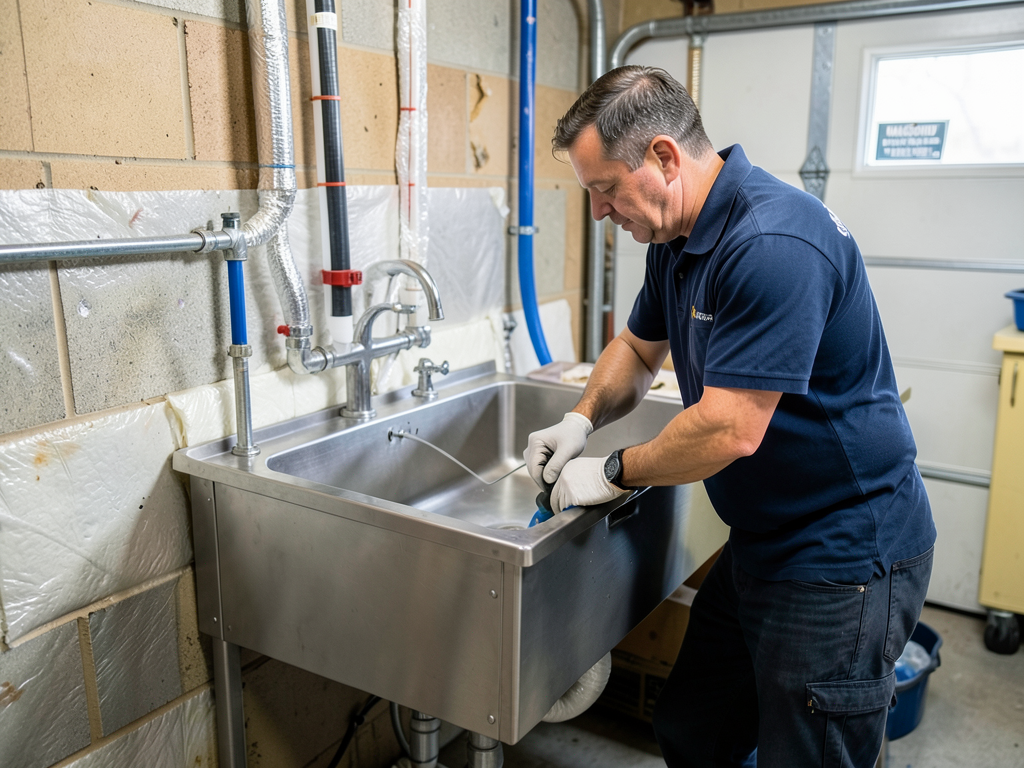
Adding a heavy-duty utility sink to your Macomb Township garage or workshop transforms the space into a true functional workspace. The right setup handles everything from messy car repairs to gardening cleanup without tracking dirt through your home. This guide walks you through everything you need to know about installation, local requirements, and keeping your plumbing protected through Michigan winters. Michigan Plumbing Code.
Understanding Macomb Township Garage Plumbing Requirements
Macomb Township’s building codes and Michigan’s climate create specific challenges for garage plumbing installations. The Township requires permits for any new plumbing fixture and Michigan’s Plumbing Code mandates proper freeze protection for any pipe running through unheated spaces. A utility sink in your garage needs proper drainage venting and winterization to prevent costly freeze damage. Macomb Township Building Department.
Most Macomb Township garages sit on concrete slabs with no existing plumbing. This means running new supply lines from your home’s main water system and creating a proper drainage path. The Michigan Residential Code requires a minimum 1.5-inch drain line for utility sinks and all fixtures must connect to an approved sewer or septic system. The Best Drain Cleaning Services for Older Houses in Grosse Pointe.
Choosing the Right Utility Sink for Michigan Conditions
Not all utility sinks handle Michigan’s demands equally. Heavy-duty polypropylene or stainless steel models resist cracking in cold temperatures better than cheaper plastic options. Look for sinks with at least 14-gauge stainless steel or commercial-grade polypropylene construction. Commercial Toilet & Urinal Repair.
Size matters too. A 20-25 gallon capacity gives you enough room for soaking car parts or cleaning large tools without constant refilling. Deeper bowls around 12-15 inches handle taller items better than standard 8-inch depths. For Macomb Township’s variable weather choose a model with integrated drainboard or backsplash to prevent water damage to surrounding walls.
Drainage Solutions for Macomb Township Garages
Gravity drainage works best when your garage floor slopes toward an existing drain or can tie into basement plumbing. Many Macomb Township homes have basements where you can run drain lines down through the floor. The pipe must maintain a minimum 1/4-inch per foot slope toward the drain. Plumbing Dearborn.
When gravity won’t work a sewage ejector pump becomes necessary. These systems grind waste and pump it uphill to your main sewer line. For Macomb Township installations choose a pump rated for at least 3/4 HP to handle the occasional gravel or debris that finds its way down the drain.
Air admittance valves offer a simpler venting solution for garage installations where traditional roof venting proves difficult. These one-way valves allow air into the drain system without letting sewer gases escape. Michigan code permits AAVs in single-family residential garages when properly installed within 6 feet of the trap.
Supply Line Considerations for Unheated Spaces
Running water lines to an unheated garage requires freeze protection. PEX piping handles freezing better than copper because it expands slightly without bursting. However even PEX needs insulation in Michigan’s climate. Why Your Corktown Home Needs a Professional Sewer Line Inspection Before You Buy.
Install supply lines inside the warm wall cavity between your home and garage rather than running them through the cold garage space. If that’s impossible use foam pipe insulation with a minimum R-4 rating. For the most vulnerable sections heat tape with a built-in thermostat prevents freezing during extreme cold snaps.
Install a shut-off valve inside your home where you can easily access it during winter. This lets you drain the lines completely when you’re away or during extended cold periods. A small drain valve at the lowest point in the garage plumbing makes winterizing quick and complete.
Winterization Strategies for Macomb Township Garages
Macomb Township experiences temperatures below zero Fahrenheit several times each winter. Without proper winterization your new utility sink becomes a frozen liability. Start with pipe insulation on all exposed supply lines using either foam tubes or fiberglass wrap.
Heat tape provides active freeze protection for the most vulnerable sections. Choose self-regulating heat tape that adjusts its output based on temperature. Install it in a spiral pattern along the pipe and plug it into a GFCI-protected outlet. The tape only draws power when temperatures drop near freezing.
Consider a small electric wall heater for your garage if you use the space year-round. Maintaining temperatures above 40 degrees Fahrenheit prevents most freezing issues. For occasional use spaces a thermostatically controlled outlet that cuts power to the heat tape when temperatures rise above 45 degrees saves energy.
Installation Process Overview
- Plan the Layout
Mark the sink location and plan supply and drain routes. Locate the nearest water supply lines and determine if you can tie into existing drainage.
- Obtain Permits
Contact Macomb Township Building Department for required permits. Michigan Plumbing Code requires permits for new fixtures and may require inspections.
- Prepare the Area
Cut openings in walls or floors as needed. Install blocking between studs to support the sink and provide mounting points for supply lines.
- Run Supply Lines
Install PEX or copper supply lines with shut-off valves. Insulate all exposed piping and install heat tape where necessary.
- Install Drainage
Run the drain line with proper slope. Install the P-trap and connect to existing drainage or install a sewage ejector pump if needed.
- Mount the Sink
Secure the utility sink to wall studs or a mounting frame. Connect supply lines to faucet and test for leaks.
- Final Testing
Check all connections for leaks. Test the drainage system and verify proper venting. Install insulation and heat tape as final steps.
Cost Factors for Macomb Township Installations
Installation costs vary based on your garage’s existing conditions. A simple installation where you can tie into nearby plumbing might cost $800-$1200 in materials and labor. Complex installations requiring new drain lines or sewage pumps run $1500-$2500.
Material costs break down to approximately $200-$400 for a quality utility sink $100-$200 for supply lines and fittings and $300-$600 for drainage components. Sewage ejector pumps add $400-$800. Permit fees in Macomb Township typically run $75-$150.
DIY installation saves labor costs but requires plumbing experience. Mistakes can lead to leaks code violations or frozen pipes. Professional installation ensures code compliance and often includes warranty protection.
Common Installation Mistakes to Avoid
Skipping the permit process might seem like a shortcut but Macomb Township can require you to remove non-permitted work. Worse unpermitted plumbing can cause issues when selling your home.
Insufficient pipe insulation causes the most frozen pipe failures. Use insulation with proper R-values and cover all exposed sections. Heat tape without a thermostat can overheat pipes or waste electricity.
Poor drainage slope prevents proper waste removal. Maintain at least 1/4-inch per foot slope toward the drain. Sags in horizontal runs trap water and create clogs.
Using standard residential faucets instead of utility-grade fixtures leads to premature failure. Utility sinks need heavy-duty faucets with reinforced handles and high-arc spouts for filling large containers.
Maintenance Tips for Long-Term Performance
Regular maintenance prevents most utility sink problems. Clean the P-trap every six months to prevent clogs from accumulating debris. Check supply line connections quarterly for small leaks that can cause water damage over time.
Test your sewage ejector pump annually by pouring water into the sink until the pump activates. Listen for unusual noises that might indicate bearing wear. Replace heat tape every 3-5 years as the resistance wire degrades with use.
Before each winter verify that shut-off valves operate smoothly and drain any water from lines you won’t use during cold weather. A few minutes of winter preparation prevents expensive freeze damage.
Frequently Asked Questions
Do I need a permit to install a utility sink in my Macomb Township garage
Yes. Macomb Township requires permits for any new plumbing fixture installation. The permit ensures your installation meets Michigan Plumbing Code requirements and passes inspection for proper drainage and venting.
Can I install a utility sink if my garage floor is below grade
Yes but you’ll likely need a sewage ejector pump. When the drain outlet sits below your main sewer line gravity won’t remove waste. A pump grinds the waste and pushes it uphill to the sewer connection.
How do I protect my garage plumbing from freezing in Michigan winters
Insulate all exposed supply lines with foam pipe insulation rated for your climate. Install heat tape on the most vulnerable sections and use a thermostatically controlled outlet. Install shut-off valves inside your heated space and drain lines during extended cold periods.
What size drain line do I need for a garage utility sink
Michigan Plumbing Code requires a minimum 1.5-inch drain line for utility sinks. This size handles typical workshop debris without clogging. The line must maintain a 1/4-inch per foot slope toward the drain or pump.
Can I tie my garage sink into my existing basement plumbing
Often yes if your basement plumbing is accessible and has capacity. You’ll need to tap into an existing drain line and ensure the connection is properly vented. A plumber can determine if your system can handle the additional fixture.
Professional Installation Benefits
Professional plumbers understand Macomb Township’s specific requirements and Michigan’s climate challenges. They know which materials perform best in local conditions and can spot potential problems before they cause damage. The Most Trusted Plumbers for Historical Home Pipe Restoration in Indian Village.
Experienced plumbers complete installations faster and with fewer mistakes than most DIYers. They have the tools to make proper connections and the knowledge to ensure everything meets code. Many offer warranties on their work giving you protection if problems develop.
Professionals also handle the permit process saving you time and ensuring your installation passes inspection. They can recommend the best layout for your specific garage configuration and suggest features you might not consider.
Call to Action
Ready to add a heavy-duty utility sink to your Macomb Township garage or workshop? Don’t risk frozen pipes or code violations with a DIY installation. Our experienced plumbers understand Michigan’s unique challenges and Macomb Township’s specific requirements. Call (313) 572-4144 today to schedule your professional utility sink installation and get your garage workspace ready for any project.
{
“@context”: “https://schema.org”,
“@type”: “BlogPosting”,
“headline”: “Adding a Heavy-Duty Utility Sink to Your Macomb Township Garage or Workshop”,
“description”: “Professional utility sink installation in Macomb Township garages requires proper permits, freeze protection, and Michigan code compliance. Call (313) 572-4144 for expert service.”,
“wordCount”: 1675,
“datePublished”: “2026-06-16T10:00:00.000Z”,
“dateModified”: “2026-06-16T10:00:00.000Z”,
“inLanguage”: “en-US”,
“mainEntityOfPage”: {
“@type”: “WebPage”,
“@id”: “https://ironwoodplumbingdetroit.com”
},
“publisher”: {
“@type”: “LocalBusiness”,
“name”: “Ironwood Plumbing Detroit”,
“url”: “https://ironwoodplumbingdetroit.com”
},
“author”: {
“@type”: “Organization”,
“name”: “Ironwood Plumbing Detroit”,
“url”: “https://ironwoodplumbingdetroit.com”
},
“image”: {
“@type”: “ImageObject”,
“url”: “https://ironwoodplumbingdetroit.com/wp-content/uploads/2026/03/adding-a-heavy-duty-utility-sink-to-your-macomb-to-1.png”
}
}
{
“@context”: “https://schema.org”,
“@type”: “Plumber”,
“name”: “Ironwood Plumbing Detroit”,
“url”: “https://ironwoodplumbingdetroit.com”,
“address”: {
“@type”: “PostalAddress”,
“addressLocality”: “Detroit”
},
“areaServed”: {
“@type”: “City”,
“name”: “Detroit”
}
}
{
“@context”: “https://schema.org”,
“@type”: “HowTo”,
“name”: “How to Install a Garage Utility Sink”,
“step”: [
{
“@type”: “HowToStep”,
“position”: 1,
“name”: “Plan the Layout”,
“text”: “Mark the sink location and plan supply and drain routes. Locate the nearest water supply lines and determine if you can tie into existing drainage.”
},
{
“@type”: “HowToStep”,
“position”: 2,
“name”: “Obtain Permits”,
“text”: “Contact Macomb Township Building Department for required permits. Michigan Plumbing Code requires permits for new fixtures and may require inspections.”
},
{
“@type”: “HowToStep”,
“position”: 3,
“name”: “Prepare the Area”,
“text”: “Cut openings in walls or floors as needed. Install blocking between studs to support the sink and provide mounting points for supply lines.”
},
{
“@type”: “HowToStep”,
“position”: 4,
“name”: “Run Supply Lines”,
“text”: “Install PEX or copper supply lines with shut-off valves. Insulate all exposed piping and install heat tape where necessary.”
},
{
“@type”: “HowToStep”,
“position”: 5,
“name”: “Install Drainage”,
“text”: “Run the drain line with proper slope. Install the P-trap and connect to existing drainage or install a sewage ejector pump if needed.”
},
{
“@type”: “HowToStep”,
“position”: 6,
“name”: “Mount the Sink”,
“text”: “Secure the utility sink to wall studs or a mounting frame. Connect supply lines to faucet and test for leaks.”
},
{
“@type”: “HowToStep”,
“position”: 7,
“name”: “Final Testing”,
“text”: “Check all connections for leaks. Test the drainage system and verify proper venting. Install insulation and heat tape as final steps.”
}
],
“image”: “https://ironwoodplumbingdetroit.com/wp-content/uploads/2026/03/adding-a-heavy-duty-utility-sink-to-your-macomb-to-1.png”
}
{
“@context”: “https://schema.org”,
“@type”: “BreadcrumbList”,
“itemListElement”: [
{
“@type”: “ListItem”,
“position”: 1,
“name”: “Home”,
“item”: “https://ironwoodplumbingdetroit.com”
},
{
“@type”: “ListItem”,
“position”: 2,
“name”: “Blog”,
“item”: “https://ironwoodplumbingdetroit.com/blog”
},
{
“@type”: “ListItem”,
“position”: 3,
“name”: “Adding a Heavy-Duty Utility Sink to Your Macomb Township Garage or Workshop”
}
]
}
{
“@context”: “https://schema.org”,
“@type”: “Service”,
“serviceType”: “Plumbing”,
“provider”: {
“@type”: “LocalBusiness”,
“name”: “Ironwood Plumbing Detroit”,
“url”: “https://ironwoodplumbingdetroit.com”
},
“areaServed”: {
“@type”: “City”,
“name”: “Detroit”
},
“description”: “Professional utility sink installation in Macomb Township garages requires proper permits, freeze protection, and Michigan code compliance. Call (313) 572-4144 for expert service.”
}