
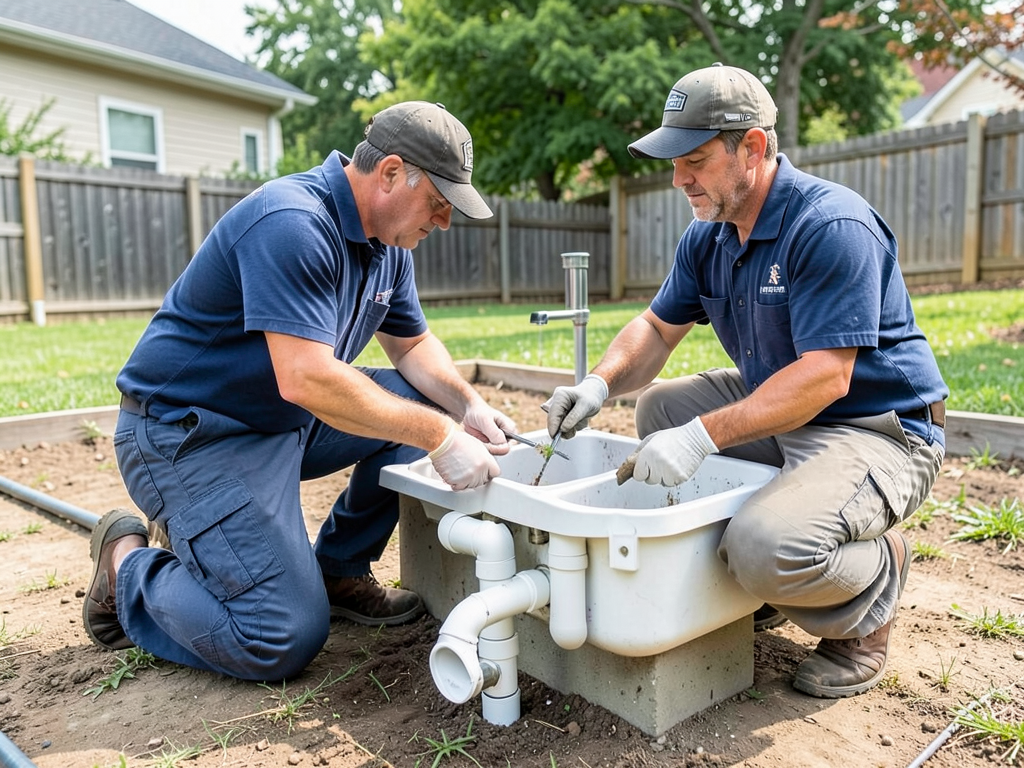
Properly draining a sink in your Rochester Hills outdoor kitchen
Draining an outdoor kitchen sink in Rochester Hills requires more than just running a pipe to the yard. Michigan’s freeze-thaw cycles, heavy clay soil, and strict plumbing codes make this a technical challenge that demands professional expertise. This guide covers the three main drainage methods, Detroit plumbing code requirements, and winterization strategies that protect your investment year-round. Michigan Plumbing Code requirements.
Understanding Your Drainage Options in Michigan
Choosing the right drainage system depends on your property layout, soil conditions, and budget. Rochester Hills’ heavy clay soil creates unique challenges for water absorption, making some methods more effective than others. The Best Drain Cleaning Services for Older Houses in Grosse Pointe.
Connection to Main Sanitary Sewer (The Gold Standard)
Tying your outdoor sink directly to the main sanitary sewer line provides the most reliable drainage solution. This method requires a licensed plumber to install proper venting and a P-trap that prevents sewer gases from entering your outdoor kitchen. The Michigan Residential Code mandates that all wastewater fixtures connect to approved drainage systems. Finding a Reliable Emergency Plumber in Midtown Detroit When Your Pipes Burst.
Ironwood Plumbing typically runs Schedule 40 PVC piping at a minimum 1/4 inch per foot slope toward the main sewer line. This ensures proper gravity flow and prevents standing water that can freeze and crack pipes during Michigan winters. The connection point must be downstream of the main house trap to comply with Wayne County regulations. Plumbing Dearborn.
Dry Wells and French Drains (The Budget Option)
Dry wells work by collecting sink water in a buried chamber filled with gravel, allowing gradual soil absorption. However, Rochester Hills’ heavy clay soil limits absorption rates to approximately 0.5 gallons per hour per square foot. This means a typical dry well needs to be significantly larger than in sandy soil areas. Why Your Corktown Home Needs a Professional Sewer Line Inspection Before You Buy.
French drains offer another alternative by channeling water through perforated pipes surrounded by gravel. These systems work best when installed with a minimum 10-foot separation from foundations and property lines. The Michigan Department of Environmental Quality requires permits for any greywater system that handles more than 100 gallons per day. EPA outdoor water use guidelines.
Greywater Systems and Pump Kits
Greywater systems collect sink water for landscape irrigation, reducing water consumption and sewer charges. These systems require a three-way valve to divert water between irrigation and sewer connections. The City of Rochester Hills allows greywater use for subsurface irrigation but prohibits spraying or surface pooling.. Read more about Setting up a greywater recycling system for your eco-friendly Ann Arbor home.
Pump kits provide solutions when gravity drainage isn’t possible due to property elevation changes. These systems include a small sump pump with a float switch that activates when water reaches a specific level. The pump then pushes water through a discharge line to the main sewer or a distant drainage area.
Detroit Plumbing Codes You Need to Know
Outdoor plumbing installations must comply with Michigan Plumbing Code Section 306, which governs drainage systems for all fixtures. The code requires a minimum 2-inch diameter drain pipe for kitchen sinks and proper venting to prevent trap siphoning.. Read more about Planning the Plumbing for a Backyard Accessory Dwelling Unit in the University District.
Wayne County mandates that all outdoor plumbing connections include a backflow preventer to protect the municipal water supply. This device prevents contaminated water from flowing backward into clean water lines during pressure drops or system failures.
Permit requirements vary by location. Rochester Hills requires permits for all outdoor plumbing work, while some Detroit suburbs have more relaxed regulations. However, all installations must meet Michigan Residential Code standards regardless of local permit requirements.
Distance requirements from property lines typically mandate a minimum 5-foot setback for drainage pipes and 10 feet for dry wells. These setbacks protect neighboring properties from potential water damage and ensure proper system function.
The ‘Michigan Factor’: Winterizing Your Outdoor Sink
Michigan’s frost line extends to 42 inches below grade in most of Southeast Michigan. Any outdoor plumbing that doesn’t extend below this depth risks freezing and bursting during severe cold snaps. The solution involves either burying pipes below the frost line or installing freeze-proof fixtures.
Freeze-proof wall hydrants feature a long stem that shuts off water deep inside the heated wall, leaving only a small amount of water in the exposed portion that drains when the valve closes. These fixtures prevent freeze damage but require proper installation angle to ensure complete drainage.
Proper sloping for gravity-fed systems means maintaining at least a 1/4 inch per foot slope toward the drainage point. This prevents water from pooling in pipes where it can freeze and cause damage. Ironwood Plumbing uses laser levels to verify proper slope during installation.
The importance of shut-off valves inside the heated envelope cannot be overstated. These valves allow you to completely isolate outdoor plumbing from the main water supply during winter months. Installing these valves near the indoor connection point provides easy access for seasonal shutoff.
Winterization also involves draining all water from pipes and fixtures before the first hard freeze. This typically means late October in Rochester Hills, though climate change has pushed this timeline later in recent years. Ironwood Plumbing offers seasonal winterization services to protect your outdoor kitchen investment.
Professional Installation vs. DIY: Risks and Costs
Professional outdoor sink installation in Metro Detroit typically costs between $1,200 and $3,500, depending on the drainage method and site conditions. This price includes permits, materials, and labor from a licensed master plumber. DIY installations might save $500-800 initially but often result in code violations and system failures.
Soil percolation rates in Southeast Michigan vary significantly. Clay soils in Rochester Hills may percolate at 0.5 gallons per hour per square foot, while sandy areas near Lake St. Clair can handle 5-10 gallons per hour. These differences dramatically affect dry well sizing and system effectiveness.
Common DIY mistakes include inadequate pipe sloping, improper venting, and using incorrect pipe materials. Schedule 40 PVC works for buried applications, but thin-wall drain pipe deteriorates quickly under soil pressure and freeze-thaw cycles. Professional plumbers understand these material requirements and installation techniques. The Most Trusted Plumbers for Historical Home Pipe Restoration in Indian Village.
Insurance implications also matter. Many homeowner policies exclude coverage for damage caused by unpermitted plumbing work. If a DIY installation causes basement flooding or foundation damage, you might face expensive repairs without insurance coverage.
Professional plumbers also provide warranties on their work, typically covering parts and labor for one year. This protection doesn’t exist with DIY installations, where you bear all responsibility for failures and repairs.
Maintenance and Troubleshooting
Regular maintenance prevents most outdoor sink drainage problems. Annual inspections should check for pipe cracks, proper drainage flow, and valve functionality. Spring is the ideal time for these inspections, as winter damage often becomes apparent when systems are first used.
Common issues include clogged drains from food debris, frozen pipes in early winter, and pump failures in greywater systems. Most problems are preventable with proper installation and seasonal maintenance routines.
Signs of drainage problems include slow draining, gurgling sounds from fixtures, and water pooling near drain outlets. These symptoms indicate potential blockages, improper sloping, or system design flaws that require professional diagnosis.
Ironwood Plumbing recommends quarterly visual inspections of outdoor plumbing components. Look for pipe discoloration, mineral deposits, or physical damage from lawn equipment or freeze-thaw cycles. Early detection prevents expensive emergency repairs.
Emergency shutoff procedures should be documented and accessible. Every outdoor kitchen should have clearly marked shutoff valves that can isolate the system quickly if problems arise. This prevents water damage while you wait for professional service.
Frequently Asked Questions
Can I connect my outdoor sink to a French drain?
Yes, but French drains work best when properly sized for Michigan’s clay soil. A typical kitchen sink produces 2-3 gallons per minute, requiring adequate drainage capacity. Professional sizing ensures your system handles peak usage without backing up.
Do I need a permit for outdoor kitchen plumbing in Rochester Hills?
Yes, Rochester Hills requires permits for all outdoor plumbing installations. The permit process ensures compliance with Michigan Plumbing Code and includes inspections to verify proper installation. Skipping permits can result in fines and insurance complications.
How deep should outdoor plumbing pipes be buried?
Pipes should extend at least 42 inches below grade to reach below the frost line in Southeast Michigan. This depth prevents freezing in most winter conditions. Pipes in shallow trenches require insulation or heat tracing for freeze protection.
What type of pipe should I use for outdoor drainage?
Schedule 40 PVC works best for buried outdoor applications in Michigan. This pipe material resists soil pressure, freeze-thaw cycles, and chemical degradation. Thin-wall drain pipe or flexible tubing lacks the durability needed for permanent outdoor installations.
How do I winterize my outdoor kitchen sink?
Winterization involves shutting off indoor supply valves, opening outdoor fixtures to drain remaining water, and optionally blowing out pipes with compressed air. This process should occur before the first hard freeze, typically in late October for Rochester Hills.
Ready to Install Your Outdoor Kitchen Sink?
Outdoor kitchen sink drainage requires expertise in Michigan plumbing codes, soil conditions, and winterization techniques. Ironwood Plumbing has served Rochester Hills and the greater Detroit area for over 15 years, handling everything from simple drain connections to complex greywater systems.
Don’t risk costly mistakes with DIY installations. Call (313) 572-4144 today to schedule your outdoor kitchen plumbing consultation. Our licensed master plumbers will assess your property, explain your options, and provide a detailed quote for code-compliant installation.
Pick up the phone and call (313) 572-4144 before the next storm hits. Proper drainage protects your home and ensures your outdoor kitchen functions perfectly for years to come.
You may also find this helpful. Comparing Moen and Delta faucets for your Birmingham kitchen upgrade.
You may also find this helpful. How to Add a Dog Wash Station to Your Royal Oak Mudroom (Plumbing Tips and Costs).
{
“@context”: “https://schema.org”,
“@type”: “BlogPosting”,
“headline”: “Properly draining a sink in your Rochester Hills outdoor kitchen”,
“description”: “Learn how to properly drain your Rochester Hills outdoor kitchen sink with Michigan code-compliant solutions, winterization tips, and local installation expertise from Ironwood Plumbing.”,
“wordCount”: 1610,
“datePublished”: “2026-05-04T08:30:00.000Z”,
“dateModified”: “2026-05-04T08:30:00.000Z”,
“inLanguage”: “en-US”,
“mainEntityOfPage”: {
“@type”: “WebPage”,
“@id”: “https://ironwoodplumbingdetroit.com”
},
“publisher”: {
“@type”: “LocalBusiness”,
“name”: “Ironwood Plumbing Detroit”,
“url”: “https://ironwoodplumbingdetroit.com”
},
“author”: {
“@type”: “Organization”,
“name”: “Ironwood Plumbing Detroit”,
“url”: “https://ironwoodplumbingdetroit.com”
},
“image”: {
“@type”: “ImageObject”,
“url”: “https://ironwoodplumbingdetroit.com/wp-content/uploads/2026/03/properly-draining-a-sink-in-your-rochester-hills-o-1.png”
}
}
{
“@context”: “https://schema.org”,
“@type”: “Plumber”,
“name”: “Ironwood Plumbing Detroit”,
“url”: “https://ironwoodplumbingdetroit.com”,
“address”: {
“@type”: “PostalAddress”,
“addressLocality”: “Detroit”
},
“areaServed”: {
“@type”: “City”,
“name”: “Detroit”
}
}
{
“@context”: “https://schema.org”,
“@type”: “FAQPage”,
“mainEntity”: [
{
“@type”: “Question”,
“name”: “Can I connect my outdoor sink to a French drain?”,
“acceptedAnswer”: {
“@type”: “Answer”,
“text”: “Yes, but French drains work best when properly sized for Michigan’s clay soil. A typical kitchen sink produces 2-3 gallons per minute, requiring adequate drainage capacity. Professional sizing ensures your system handles peak usage without backing up.”
}
},
{
“@type”: “Question”,
“name”: “Do I need a permit for outdoor kitchen plumbing in Rochester Hills?”,
“acceptedAnswer”: {
“@type”: “Answer”,
“text”: “Yes, Rochester Hills requires permits for all outdoor plumbing installations. The permit process ensures compliance with Michigan Plumbing Code and includes inspections to verify proper installation. Skipping permits can result in fines and insurance complications.”
}
},
{
“@type”: “Question”,
“name”: “How deep should outdoor plumbing pipes be buried?”,
“acceptedAnswer”: {
“@type”: “Answer”,
“text”: “Pipes should extend at least 42 inches below grade to reach below the frost line in Southeast Michigan. This depth prevents freezing in most winter conditions. Pipes in shallow trenches require insulation or heat tracing for freeze protection.”
}
},
{
“@type”: “Question”,
“name”: “What type of pipe should I use for outdoor drainage?”,
“acceptedAnswer”: {
“@type”: “Answer”,
“text”: “Schedule 40 PVC works best for buried outdoor applications in Michigan. This pipe material resists soil pressure, freeze-thaw cycles, and chemical degradation. Thin-wall drain pipe or flexible tubing lacks the durability needed for permanent outdoor installations.”
}
},
{
“@type”: “Question”,
“name”: “How do I winterize my outdoor kitchen sink?”,
“acceptedAnswer”: {
“@type”: “Answer”,
“text”: “Winterization involves shutting off indoor supply valves, opening outdoor fixtures to drain remaining water, and optionally blowing out pipes with compressed air. This process should occur before the first hard freeze, typically in late October for Rochester Hills.”
}
},
{
“@type”: “Question”,
“name”: “Ready to Install Your Outdoor Kitchen Sink?”,
“acceptedAnswer”: {
“@type”: “Answer”,
“text”: “Outdoor kitchen sink drainage requires expertise in Michigan plumbing codes, soil conditions, and winterization techniques. Ironwood Plumbing has served Rochester Hills and the greater Detroit area for over 15 years, handling everything from simple drain connections to complex greywater systems.”
}
}
]
}
{
“@context”: “https://schema.org”,
“@type”: “BreadcrumbList”,
“itemListElement”: [
{
“@type”: “ListItem”,
“position”: 1,
“name”: “Home”,
“item”: “https://ironwoodplumbingdetroit.com”
},
{
“@type”: “ListItem”,
“position”: 2,
“name”: “Blog”,
“item”: “https://ironwoodplumbingdetroit.com/blog”
},
{
“@type”: “ListItem”,
“position”: 3,
“name”: “Properly draining a sink in your Rochester Hills outdoor kitchen”
}
]
}
{
“@context”: “https://schema.org”,
“@type”: “Service”,
“serviceType”: “Plumbing”,
“provider”: {
“@type”: “LocalBusiness”,
“name”: “Ironwood Plumbing Detroit”,
“url”: “https://ironwoodplumbingdetroit.com”
},
“areaServed”: {
“@type”: “City”,
“name”: “Detroit”
},
“description”: “Learn how to properly drain your Rochester Hills outdoor kitchen sink with Michigan code-compliant solutions, winterization tips, and local installation expertise from Ironwood Plumbing.”
}