
Getting a Tankless Water Heater Installed in Your Downtown Detroit Loft
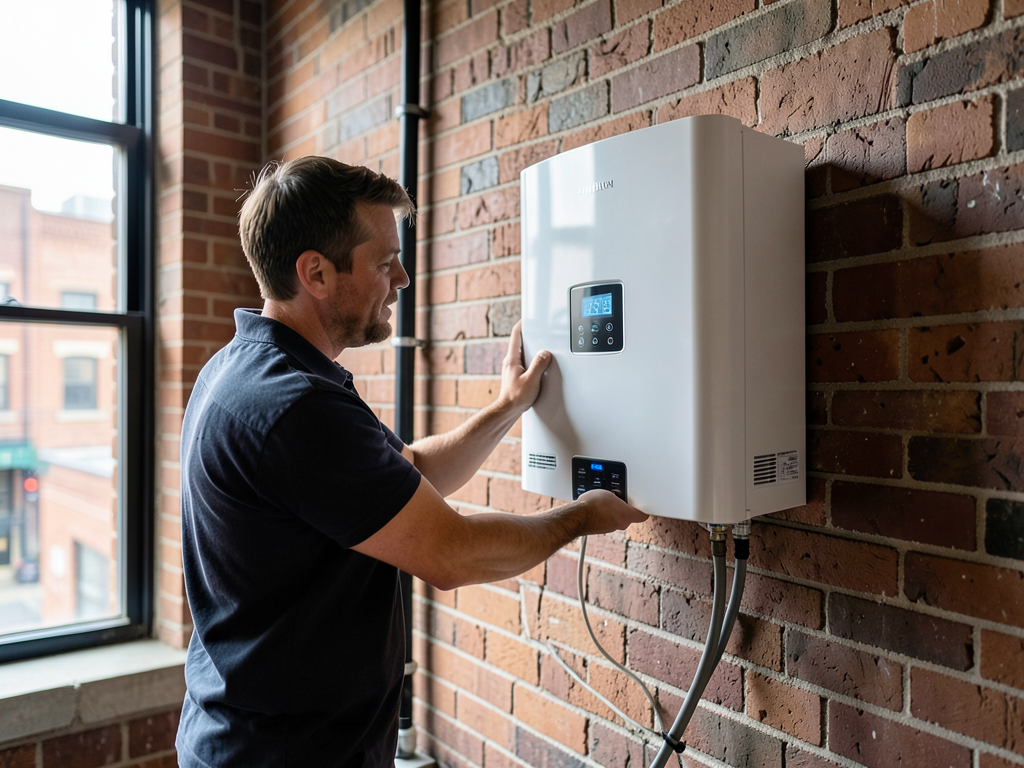
Downtown Detroit lofts need reliable hot water without sacrificing valuable space. Tankless water heaters deliver endless hot water on demand while mounting on walls to free up floor space. These compact units heat water only when you need it which means lower utility bills and no more cold showers during busy mornings.. Read more about Finding a Reliable Emergency Plumber in Midtown Detroit When Your Pipes Burst.
Ironwood Plumbing has installed hundreds of tankless systems in Detroit’s historic buildings. We understand the unique challenges of converting older loft spaces from traditional tank systems to modern tankless technology. Our licensed plumbers know Detroit building codes and can handle everything from gas line upgrades to venting requirements.. Read more about Choosing the Best Commercial Plumber for Your Eastern Market Restaurant.
Call (313) 572-4144 today to schedule your tankless water heater consultation and get your downtown loft ready for efficient hot water.. Read more about Professional Water Filtration System Installation for Homes in Huntington Woods.
Why Tankless Water Heaters Work Well in Detroit Lofts
Downtown Detroit lofts often feature open floor plans with limited storage space. Traditional 40 to 50-gallon water heaters take up valuable closet or corner space that could be used for storage or living areas. Tankless units mount on walls and free up that floor space instantly.. Read more about Should You Keep Your Traditional Water Heater or Go Tankless in a Woodbridge Fixer Upper?.
Detroit’s cold winters mean groundwater enters at near freezing temperatures. Tankless systems must be properly sized to handle the temperature rise needed to deliver comfortable hot water. A typical downtown loft with one bathroom needs a unit that can produce at least 4 to 5 gallons per minute at a 70-degree temperature rise.
Many historic loft buildings in Detroit’s theater district and Eastern Market area were constructed before modern plumbing codes existed. This means gas lines often need upgrades to handle the higher BTU requirements of tankless units. Our plumbers can assess your existing infrastructure and recommend necessary upgrades.. Read more about The Best Local Plumbers for Faucet and Fixture Upgrades in Brush Park.
Detroit’s hard water creates scale buildup that can damage tankless heat exchangers over time. We install scale inhibitors and recommend annual maintenance to protect your investment. Without proper treatment, mineral deposits can reduce efficiency by up to 30 percent within three years.
Call (313) 572-4144 to get your tankless water heater properly sized for your Detroit loft.
Our Tankless Installation Process for Detroit Properties
Installing a tankless water heater in a downtown Detroit loft requires careful planning and execution. Our process ensures your new system meets all local codes and delivers reliable performance.. Read more about Reliable Gas Line Repair and Installation for Palmer Park Homeowners.
- Initial Assessment
We inspect your loft’s existing plumbing, electrical, and gas systems. This includes checking pipe sizes, gas line capacity, and available venting routes. Many Detroit lofts need gas line upgrades from 1/2 inch to 3/4 inch to support tankless units.
- Permit Acquisition
We pull all necessary permits through the Detroit Building Safety Engineering and Environmental Department. This ensures your installation meets Michigan Residential Code requirements for venting, gas connections, and seismic bracing.
- System Sizing
We calculate your peak hot water demand based on your loft’s fixtures and usage patterns. A downtown loft with a full kitchen and one bathroom typically needs a 150,000 to 199,000 BTU unit.
- Installation Day
Our team arrives with all necessary tools and materials. We mount the unit, run new gas lines if needed, install proper venting, and connect to your existing plumbing. Most installations take 4 to 6 hours.
- Testing and Training
We test the system for proper operation, check for gas leaks, and verify temperature settings. We also show you how to use the digital controls and explain maintenance requirements.
Detroit’s building codes require specific venting materials for gas tankless units. We use Category III stainless steel venting that can handle the high temperatures and acidic condensate produced by condensing tankless heaters.
Many downtown lofts lack dedicated electrical circuits for tankless units. We can install the necessary 120V or 240V circuits to power the unit’s controls and ignition systems. This is especially important in older buildings where electrical systems may not meet current code requirements.
After installation we handle all cleanup and debris removal. We also provide documentation for your records including warranty information and maintenance schedules. Our work comes with a one-year labor warranty on top of the manufacturer’s coverage.
Ready to upgrade your loft’s water heating? Call (313) 572-4144 for professional tankless installation.
Detroit Water Conditions and Hard Water Solutions
Detroit’s water comes from the Detroit River and Lake St. Clair. The Great Lakes region naturally produces hard water with mineral content between 7 to 12 grains per gallon. This is considered moderately hard to hard water that creates scale buildup in plumbing systems.
Tankless water heaters are particularly vulnerable to scale because they heat water through small passages in the heat exchanger. Even a thin layer of scale can reduce efficiency by 20 to 30 percent. In Detroit’s hard water conditions, this means higher energy bills and potential system failure within 3 to 5 years without proper treatment.
We recommend installing a scale inhibitor system with every tankless installation in Detroit. These systems use polyphosphate crystals to coat mineral particles and prevent them from sticking to heat exchanger surfaces. The treatment costs about $200 to $300 but can extend your tankless unit’s life by 5 to 7 years.
Annual maintenance is critical for tankless systems in Detroit. We perform a complete flush using food-grade citric acid to dissolve any scale buildup. This process takes about 90 minutes and costs between $150 to $200. Without annual descaling, scale can cause hot spots that lead to heat exchanger failure.
Detroit’s water also contains chlorine and chloramines used for disinfection. These chemicals can damage rubber seals and gaskets over time. We install activated carbon filters to remove these chemicals before they reach your tankless unit. This simple step prevents premature wear on internal components.
During Michigan winters, cold groundwater temperatures put extra stress on tankless systems. Water entering at 35 degrees Fahrenheit requires more energy to heat than water at 50 degrees. We size units with a 30 percent safety margin to ensure reliable performance during the coldest months.
Protect your tankless investment with proper water treatment. Call (313) 572-4144 for scale inhibitor installation.
Energy Savings and Detroit Utility Rebates
Tankless water heaters can reduce energy consumption by 24 to 34 percent compared to traditional tanks. In Detroit’s climate, this translates to annual savings of $100 to $150 for a typical loft. The exact savings depend on your hot water usage patterns and the efficiency of your current system.
DTE Energy offers rebates for high-efficiency tankless water heaters that meet Energy Star certification. Current rebates range from $100 to $200 depending on the unit’s Uniform Energy Factor rating. Units with UEF ratings above 0.87 qualify for the maximum rebate amount. DTE Energy rebates and incentives.
Federal tax credits for energy-efficient water heaters can provide additional savings. The Energy Efficient Home Improvement Credit offers 30 percent of the installation cost up to $1,200 for qualified equipment. This credit applies to both the unit and professional installation costs.
Detroit’s average gas rates make tankless systems particularly attractive. At current prices, a family of two using 40 gallons of hot water daily can recover the higher upfront cost of a tankless system in 3 to 5 years through energy savings alone.
Beyond energy savings, tankless units eliminate the standby heat loss that occurs with traditional tanks. A typical 40-gallon tank loses 20 to 30 percent of its heated water energy while sitting idle. Tankless systems avoid this waste entirely by heating water only when needed.
Commercial properties in Detroit’s entertainment district can benefit even more from tankless technology. Restaurants and bars with high hot water demand can see energy savings of 40 to 50 percent compared to traditional systems. The space savings also allow for additional revenue-generating square footage.
Maximize your energy savings with available rebates. Call (313) 572-4144 to learn about current Detroit area incentives.
Tankless vs Traditional Tanks in Michigan Winters
Traditional tank water heaters store 40 to 50 gallons of hot water ready for use. This provides immediate hot water but creates standby heat loss. In Michigan winters, tanks work harder to maintain temperature as cold air surrounds the tank. This increases energy consumption by 15 to 25 percent during winter months.
Tankless systems heat water on demand so they don’t waste energy maintaining temperature. However, they face a different challenge in Michigan winters. Cold groundwater entering at 35 degrees Fahrenheit requires more energy to heat than groundwater at 50 degrees. This affects flow rates and recovery times.
A properly sized tankless unit in Detroit can deliver 4 to 5 gallons per minute of hot water even with 70-degree temperature rise. This is enough for two simultaneous showers or one shower plus dishwasher operation. Traditional tanks can deliver higher flow rates but only until the stored hot water runs out.
During power outages, traditional tanks can still provide hot water until the stored supply runs out. Tankless units require electricity for controls and ignition, so they stop working entirely during outages. For Detroit residents who experience occasional winter storms, this is an important consideration.
Lifespan comparisons favor tankless systems in Michigan’s climate. Traditional tanks typically last 8 to 12 years before corrosion causes leaks. Tankless units with proper maintenance can last 20 years or more. The longer lifespan helps offset the higher initial cost of tankless technology.
Space requirements differ significantly between the two technologies. A traditional 40-gallon tank measures about 60 inches tall by 24 inches wide. A tankless unit for the same application measures 28 inches tall by 20 inches wide by 10 inches deep. The space savings can be substantial in downtown lofts.
Choose the right system for your Detroit loft. Call (313) 572-4144 for a professional comparison.
Frequently Asked Questions
How long does tankless water heater installation take?
Most installations in downtown Detroit lofts take 4 to 6 hours. This includes removing the old unit, running new gas lines if needed, installing venting, and testing the system. Complex installations in historic buildings may take longer.
Do I need a permit for tankless water heater installation in Detroit?
Yes. Detroit requires permits for all water heater replacements including tankless units. We handle all permit applications through the Building Safety Engineering and Environmental Department as part of our service.
Can my existing gas line handle a tankless water heater?
Many older Detroit lofts have 1/2 inch gas lines that need upgrading to 3/4 inch to support tankless units. We assess your existing gas service and recommend necessary upgrades during our initial consultation.
How often should I service my tankless water heater?
Annual maintenance is recommended for all tankless systems in Detroit. This includes descaling to remove mineral buildup and checking all safety components. Without annual service, efficiency can drop by 20 to 30 percent within three years.
What brands of tankless water heaters do you install?
We install major brands including Navien, Rinnai, Rheem, and Bosch. Each brand offers different features and price points. We recommend specific models based on your loft’s hot water demand and your budget.
How much do tankless water heaters cost in Detroit?
Installation costs range from $3,500 to $5,500 depending on the unit size and complexity of installation. This includes the unit, permits, installation labor, and basic water treatment. Larger units or complex venting can increase costs.
Will a tankless water heater work during a power outage?
No. Tankless units require electricity for controls and ignition. Traditional tank heaters can provide hot water during outages until the stored supply runs out. Consider a backup power source if outage protection is important. For more information, visit Energy.gov tankless water heater guide.
{
“@context”: “https://schema.org”,
“@type”: “BlogPosting”,
“headline”: “Getting a Tankless Water Heater Installed in Your Downtown Detroit Loft”,
“description”: “Expert tankless water heater installation for downtown Detroit lofts. Learn about sizing, permits, and Detroit-specific plumbing requirements from Ironwood Plumbing.”,
“wordCount”: 1905,
“datePublished”: “2026-02-20T12:10:00.000Z”,
“dateModified”: “2026-02-20T12:10:00.000Z”,
“inLanguage”: “en-US”,
“mainEntityOfPage”: {
“@type”: “WebPage”,
“@id”: “https://ironwoodplumbingdetroit.com”
},
“publisher”: {
“@type”: “LocalBusiness”,
“name”: “Ironwood Plumbing Detroit”,
“url”: “https://ironwoodplumbingdetroit.com”
},
“author”: {
“@type”: “Organization”,
“name”: “Ironwood Plumbing Detroit”,
“url”: “https://ironwoodplumbingdetroit.com”
},
“image”: {
“@type”: “ImageObject”,
“url”: “https://ironwoodplumbingdetroit.com/wp-content/uploads/2026/03/getting-a-tankless-water-heater-installed-in-your-1.png”
}
}
{
“@context”: “https://schema.org”,
“@type”: “Plumber”,
“name”: “Ironwood Plumbing Detroit”,
“url”: “https://ironwoodplumbingdetroit.com”,
“address”: {
“@type”: “PostalAddress”,
“addressLocality”: “Detroit”
},
“areaServed”: {
“@type”: “City”,
“name”: “Detroit”
}
}
{
“@context”: “https://schema.org”,
“@type”: “FAQPage”,
“mainEntity”: [
{
“@type”: “Question”,
“name”: “How long does tankless water heater installation take?”,
“acceptedAnswer”: {
“@type”: “Answer”,
“text”: “Most installations in downtown Detroit lofts take 4 to 6 hours. This includes removing the old unit, running new gas lines if needed, installing venting, and testing the system. Complex installations in historic buildings may take longer.”
}
},
{
“@type”: “Question”,
“name”: “Do I need a permit for tankless water heater installation in Detroit?”,
“acceptedAnswer”: {
“@type”: “Answer”,
“text”: “Yes. Detroit requires permits for all water heater replacements including tankless units. We handle all permit applications through the Building Safety Engineering and Environmental Department as part of our service.”
}
},
{
“@type”: “Question”,
“name”: “Can my existing gas line handle a tankless water heater?”,
“acceptedAnswer”: {
“@type”: “Answer”,
“text”: “Many older Detroit lofts have 1/2 inch gas lines that need upgrading to 3/4 inch to support tankless units. We assess your existing gas service and recommend necessary upgrades during our initial consultation.”
}
},
{
“@type”: “Question”,
“name”: “How often should I service my tankless water heater?”,
“acceptedAnswer”: {
“@type”: “Answer”,
“text”: “Annual maintenance is recommended for all tankless systems in Detroit. This includes descaling to remove mineral buildup and checking all safety components. Without annual service, efficiency can drop by 20 to 30 percent within three years.”
}
},
{
“@type”: “Question”,
“name”: “What brands of tankless water heaters do you install?”,
“acceptedAnswer”: {
“@type”: “Answer”,
“text”: “We install major brands including Navien, Rinnai, Rheem, and Bosch. Each brand offers different features and price points. We recommend specific models based on your loft’s hot water demand and your budget.”
}
},
{
“@type”: “Question”,
“name”: “How much do tankless water heaters cost in Detroit?”,
“acceptedAnswer”: {
“@type”: “Answer”,
“text”: “Installation costs range from $3,500 to $5,500 depending on the unit size and complexity of installation. This includes the unit, permits, installation labor, and basic water treatment. Larger units or complex venting can increase costs.”
}
},
{
“@type”: “Question”,
“name”: “Will a tankless water heater work during a power outage?”,
“acceptedAnswer”: {
“@type”: “Answer”,
“text”: “No. Tankless units require electricity for controls and ignition. Traditional tank heaters can provide hot water during outages until the stored supply runs out. Consider a backup power source if outage protection is important. For more information, visit Energy.gov tankless water heater guide.”
}
}
]
}
{
“@context”: “https://schema.org”,
“@type”: “HowTo”,
“name”: “Tankless Water Heater Installation Process”,
“step”: [
{
“@type”: “HowToStep”,
“position”: 1,
“name”: “Initial Assessment”,
“text”: “We inspect your loft’s existing plumbing, electrical, and gas systems. This includes checking pipe sizes, gas line capacity, and available venting routes. Many Detroit lofts need gas line upgrades from 1/2 inch to 3/4 inch to support tankless units.”
},
{
“@type”: “HowToStep”,
“position”: 2,
“name”: “Permit Acquisition”,
“text”: “We pull all necessary permits through the Detroit Building Safety Engineering and Environmental Department. This ensures your installation meets Michigan Residential Code requirements for venting, gas connections, and seismic bracing.”
},
{
“@type”: “HowToStep”,
“position”: 3,
“name”: “System Sizing”,
“text”: “We calculate your peak hot water demand based on your loft’s fixtures and usage patterns. A downtown loft with a full kitchen and one bathroom typically needs a 150,000 to 199,000 BTU unit.”
},
{
“@type”: “HowToStep”,
“position”: 4,
“name”: “Installation Day”,
“text”: “Our team arrives with all necessary tools and materials. We mount the unit, run new gas lines if needed, install proper venting, and connect to your existing plumbing. Most installations take 4 to 6 hours.”
},
{
“@type”: “HowToStep”,
“position”: 5,
“name”: “Testing and Training”,
“text”: “We test the system for proper operation, check for gas leaks, and verify temperature settings. We also show you how to use the digital controls and explain maintenance requirements.”
}
],
“image”: “https://ironwoodplumbingdetroit.com/wp-content/uploads/2026/03/getting-a-tankless-water-heater-installed-in-your-1.png”
}
{
“@context”: “https://schema.org”,
“@type”: “BreadcrumbList”,
“itemListElement”: [
{
“@type”: “ListItem”,
“position”: 1,
“name”: “Home”,
“item”: “https://ironwoodplumbingdetroit.com”
},
{
“@type”: “ListItem”,
“position”: 2,
“name”: “Blog”,
“item”: “https://ironwoodplumbingdetroit.com/blog”
},
{
“@type”: “ListItem”,
“position”: 3,
“name”: “Getting a Tankless Water Heater Installed in Your Downtown Detroit Loft”
}
]
}
{
“@context”: “https://schema.org”,
“@type”: “Service”,
“serviceType”: “Plumbing”,
“provider”: {
“@type”: “LocalBusiness”,
“name”: “Ironwood Plumbing Detroit”,
“url”: “https://ironwoodplumbingdetroit.com”
},
“areaServed”: {
“@type”: “City”,
“name”: “Detroit”
},
“description”: “Expert tankless water heater installation for downtown Detroit lofts. Learn about sizing, permits, and Detroit-specific plumbing requirements from Ironwood Plumbing.”
}