





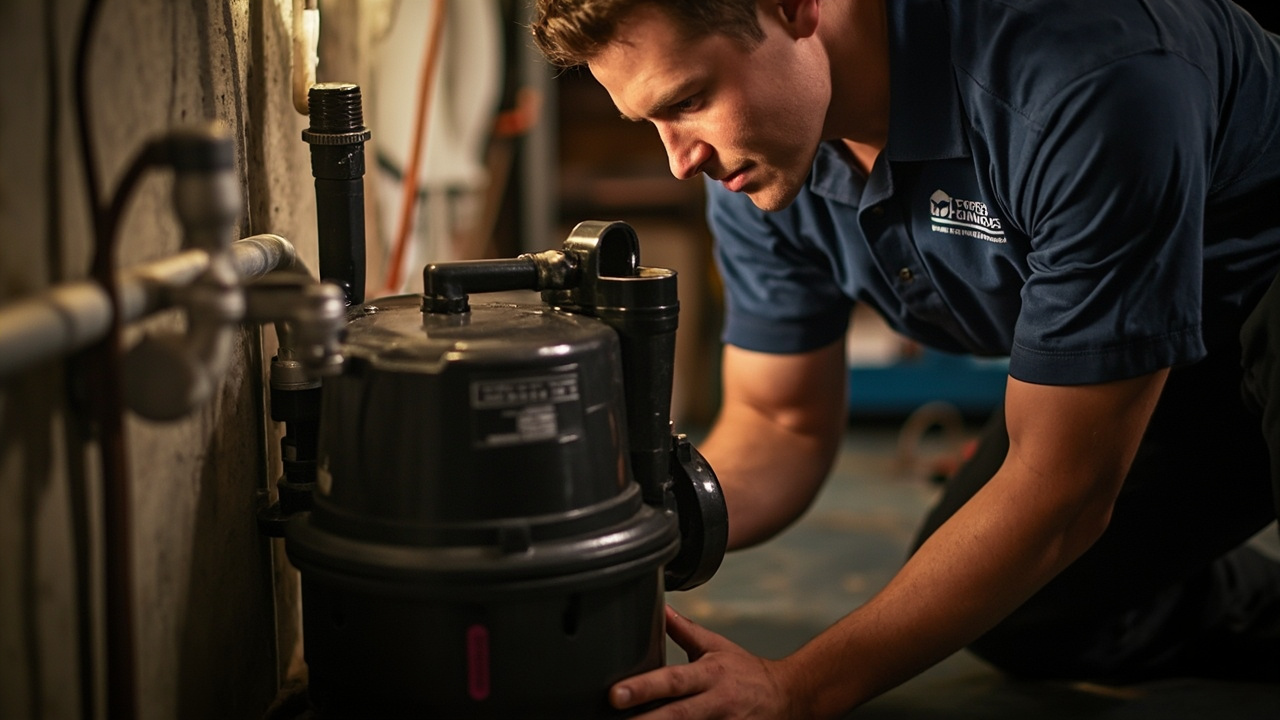
Detroit sits on heavy clay soil with low permeability, meaning water cannot absorb quickly during storms. This causes hydrostatic pressure against basement walls and foundations, forcing groundwater through any available crack or seam. The water table rises significantly during spring snowmelt and fall rainfall, sometimes climbing 3-4 feet higher than summer levels. Properties near the Detroit River, Rouge River, and in low-lying areas like the East Side face constant groundwater pressure that requires larger capacity sump pumps cycling more frequently than homes in elevated neighborhoods. Standard 1/3 horsepower pumps fail quickly under these conditions. Detroit basements need properly sized systems accounting for clay soil drainage and seasonal fluctuations.
Wayne County building codes require specific sump pump discharge methods to protect the regional sewer system from overload during storms. Detroit homeowners cannot connect sump pumps to sanitary sewers, a practice that strains the wastewater treatment plant and causes combined sewer overflows into the Detroit River. Discharge must terminate on your property with proper grading to prevent neighbor disputes and code violations. Local inspectors check these installations during home sales and rental certifications. Working with plumbing professionals who understand Detroit's discharge regulations prevents expensive corrections and failed inspections. The city's combined sewer system already struggles during heavy rain. Proper sump pump routing protects both your property and the broader Detroit infrastructure.