
What Detroit Residents Need to Know About Replacing Lead Service Lines on Their Property
Lead service lines pose serious health risks to Detroit families, but many homeowners don’t know if they have them or what their responsibilities are. The city’s aging infrastructure means thousands of homes still receive water through lead pipes that can leach toxic metals into drinking water. Understanding your options for identification, testing, and replacement is crucial for protecting your family’s health. Detroit Water and Sewerage Department Lead Service Line Replacement Program.
Detroit’s water infrastructure dates back to the early 1900s, and many homes built before 1950 still have lead service lines connecting the main water pipe to their property. While the Detroit Water and Sewerage Department has been working to replace public side lead lines, homeowners are responsible for the private side from the curb to their home. This guide breaks down everything you need to know about lead service line replacement in Detroit, from health risks to costs and available assistance programs. EPA Lead in Drinking Water Information.
The State of Lead Service Lines in Detroit
Detroit has one of the highest concentrations of lead service lines in the nation. The city estimates that approximately 120,000 properties still have lead service lines, though exact numbers vary as many records from the early 20th century are incomplete or lost.
The Detroit Water and Sewerage Department (DWSD) launched its Lead Service Line Replacement Program in 2018, aiming to replace all public side lead lines at no cost to homeowners. However, the private side replacement remains the homeowner’s responsibility, creating a gap in protection for many families.
Recent infrastructure mapping projects have revealed that certain Detroit neighborhoods have significantly higher concentrations of lead lines. Areas like Southwest Detroit, parts of the East Side, and older neighborhoods near the city center show the highest prevalence rates. The Michigan Department of Environment, Great Lakes, and Energy (EGLE) has prioritized these areas for replacement efforts.
The city’s combined sewer overflow system, which handles both stormwater and wastewater, can exacerbate lead contamination during heavy rain events. When the system becomes overwhelmed, water flow patterns change, potentially disturbing lead particles that have settled in pipes over decades.
Health Risks of Lead in Your Drinking Water
Lead exposure through drinking water poses serious health risks, particularly for children under six and pregnant women. Even low levels of lead exposure can cause irreversible damage to developing brains and nervous systems.
Children exposed to lead may experience reduced IQ, learning disabilities, attention deficit disorders, and behavioral problems. The developing fetus is especially vulnerable, as lead can cross the placental barrier and affect critical developmental stages. Adults aren’t immune either – lead exposure has been linked to kidney problems, high blood pressure, and reproductive issues.
The EPA has established an action level of 15 parts per billion (ppb) for lead in drinking water, but health experts agree that no level of lead exposure is safe. The Centers for Disease Control and Prevention (CDC) states that lead can accumulate in the body over time, with children absorbing 40-50% of ingested lead compared to 10-15% for adults.
Lead doesn’t just affect drinking water. It can leach into water used for cooking, infant formula preparation, and even bathing. Hot water dissolves lead more readily than cold water, making hot water from lead pipes particularly dangerous for consumption.
How to Identify if You Have Lead Pipes
Identifying lead service lines requires a simple but specific test. Here’s how to check your home’s plumbing: Plumbing Dearborn.
- Locate Your Water Service Line
Find where the water line enters your home, typically in the basement, crawl space, or utility room. Look for a pipe that’s about 1 to 1.5 inches in diameter.
- Perform the Scratch Test
Use a coin or screwdriver to gently scratch the pipe’s surface. Lead pipes scratch easily and reveal a shiny, silver-colored metal underneath the oxidation layer.
- Check for Magnets
Lead is not magnetic. If a magnet sticks to your pipe, it’s likely steel or iron, not lead.
- Look for Pipe Characteristics
Lead pipes are typically soft and can be easily bent or dented. They may have a dull gray color and show signs of wear or corrosion.
- Check Pipe Connections
Lead pipes often have bulb-shaped connections where sections join together, unlike the threaded connections found on steel pipes.
If you’re unsure about your pipe material, you can request a free lead inspection through the DWSD’s inspection program. A certified inspector will examine your service line and provide documentation of the pipe material.
Another identification method involves checking your home’s age. Homes built before 1950 in Detroit have a high probability of containing lead service lines. You can also check historical records through the Wayne County Register of Deeds or contact the DWSD for property-specific information.
Our Replacement Process
Replacing lead service lines requires careful planning and execution to ensure safe, code-compliant installation. Our process follows all Michigan plumbing codes and DWSD requirements. Plumbing Taylor.
The replacement process begins with a thorough site assessment. We examine the existing pipe configuration, soil conditions, and any obstacles that might affect the installation. Detroit’s heavy clay soil presents unique challenges, as it can be difficult to excavate and may contain debris from decades of urban development.
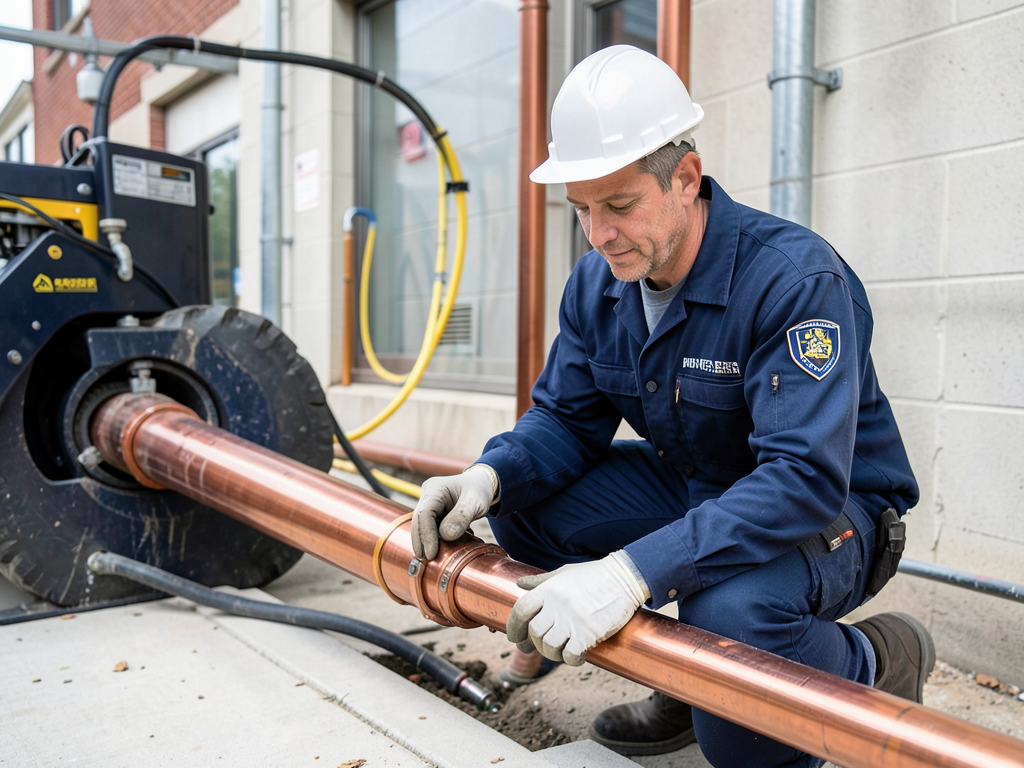
We offer two primary replacement methods: traditional open-cut excavation and trenchless pipe pulling. Open-cut involves digging a trench along the entire pipe route, while trenchless methods use specialized equipment to pull new pipe through the existing line, minimizing surface disruption.
The trenchless pipe pulling method is particularly well-suited for Detroit’s older neighborhoods where mature trees, concrete driveways, and established landscaping make traditional excavation disruptive. This method typically reduces project time by 50-70% and eliminates the need to restore driveways or sidewalks.
During replacement, we install Type K copper piping, which meets all Michigan plumbing code requirements for potable water service. Copper provides excellent durability and doesn’t leach harmful substances into drinking water. We also install new shut-off valves and ensure proper connections to both the city main and your home’s plumbing system.
Post-replacement, we conduct pressure testing to verify the integrity of the new installation. We also flush the system thoroughly to remove any debris or sediment that may have entered during the replacement process.
Cost and Detroit City Assistance Programs
The cost of replacing a lead service line in Detroit varies significantly based on several factors. The private side replacement typically costs between $3,000 and $8,000, with the average falling around $5,000 for a standard residential installation.
Key cost factors include the pipe’s length, depth, and accessibility. Pipes running under driveways, sidewalks, or mature landscaping require additional work and increase costs. The presence of tree roots, underground utilities, or other obstacles also affects the final price.
The DWSD offers several assistance programs to help offset replacement costs. The Lead Service Line Replacement Program provides free replacement of the public side of the service line. Additionally, the city has partnered with the Great Lakes Water Authority to offer low-interest loans and grants for private side replacement.
Qualified homeowners may receive up to 50% of their replacement costs through the city’s grant program, with maximum awards typically capped at $4,000. Income-eligible residents may qualify for even higher assistance amounts. The application process requires proof of homeownership, income verification, and confirmation of lead service line presence.
Many Detroit residents are unaware that their homeowner’s insurance may cover part of the replacement cost. While policies vary, some insurance providers offer coverage for lead line replacement, especially if contamination has been detected through water testing.
Detroit Lead Replacement FAQs
How long does the replacement process take?
Most residential lead service line replacements can be completed in one to two days. The actual pipe replacement typically takes 4-8 hours, with additional time needed for permitting, inspection, and restoration work.
Will my water be shut off during replacement?
Yes, water service must be interrupted during the replacement. We typically schedule this work during daytime hours and provide advance notice. Most households can manage with minimal disruption by planning accordingly.
Do I need a permit for lead service line replacement?
Yes, Michigan plumbing code requires permits for service line replacement. We handle all permitting through the City of Detroit Building Safety Engineering and Environmental Department. The permit process typically takes 3-5 business days.
How do I know if my replacement was done correctly?
Proper replacement includes pressure testing, water quality testing, and final inspection by the city’s plumbing inspector. We provide documentation of all testing and inspections for your records.
Can I replace just part of my lead service line?
Partial replacement is not recommended and may actually increase lead levels temporarily. The Michigan Department of Health and Human Services advises against partial replacements due to the risk of increased lead leaching from disturbed pipes.
What happens to the old lead pipes?
Lead pipes are considered hazardous waste and must be disposed of properly. We coordinate with licensed hazardous waste handlers to ensure all lead materials are safely removed and recycled according to EPA regulations.
How soon after replacement can I use my water?
We recommend flushing your new service line for 30 minutes after installation. Your water will be safe to use immediately after flushing, though it may take a few days for any residual sediment to clear completely.
Comparing Replacement Methods
| Method | Cost Range | Time Required | Surface Impact | Best For |
|---|---|---|---|---|
| Open-Cut Excavation | $3,000-$8,000 | 1-2 days | High – lawn/driveway restoration needed | Straight runs, no obstacles |
| Trenchless Pipe Pulling | $4,000-$9,000 | 1 day | Low – minimal surface disruption | Mature landscaping, driveways, tight spaces |
| Directional Boring | $5,000-$10,000 | 1-2 days | Very low – no trench required | Under sidewalks, streets, or structures |
Immediate Steps for Detroit Homeowners
If you suspect lead service lines but aren’t ready for replacement, several immediate actions can reduce your family’s exposure risk. These steps are particularly important for households with young children or pregnant women.
Install NSF/ANSI Standard 53 certified water filters on all faucets used for drinking and cooking. These filters are specifically designed to remove lead and other heavy metals. Replace filter cartridges according to manufacturer specifications – typically every 2-3 months depending on usage.
Always use cold water for drinking and cooking. Hot water dissolves lead more readily than cold water. If you need hot water for cooking, heat cold water on the stove rather than using hot tap water.
Flush your pipes before using water for drinking or cooking. If water hasn’t been used for several hours, run the tap until the water gets noticeably colder – typically 30 seconds to 2 minutes. This clears water that may have been sitting in lead pipes.
Consider having your water tested by a state-certified laboratory. The Michigan Department of Environment, Great Lakes, and Energy maintains a list of approved testing facilities. Testing costs typically range from $20 to $100 depending on the number of contaminants tested.
Keep records of any lead-related work or testing. This documentation can be valuable for future home sales, insurance claims, or if you pursue assistance programs.
The Impact on Detroit Home Values
Lead service line replacement can significantly impact Detroit home values and marketability. Homes with confirmed lead line replacement often sell for 3-5% more than comparable properties with unknown or confirmed lead lines.
Buyers are increasingly aware of lead contamination risks, and many include lead line inspection contingencies in their purchase agreements. Properties with documented lead line replacement may qualify for better mortgage terms or insurance rates.
The city’s replacement efforts are creating a patchwork effect across Detroit neighborhoods. Areas where the DWSD has completed public side replacements are seeing increased buyer confidence, while areas still awaiting replacement may experience slower sales or lower offers.
For landlords, lead line replacement can reduce liability risks and may qualify as a capital improvement that justifies rent adjustments. Some Detroit rental assistance programs now require proof of lead-free plumbing for eligibility.
Financing Options for Detroit Residents
Several financing options exist for Detroit residents who need lead service line replacement but can’t afford the upfront costs. Understanding these options can make replacement more accessible.
The Michigan Saves program offers low-interest home improvement loans specifically for lead line replacement. These loans feature terms up to 10 years with interest rates typically 3-5% lower than conventional personal loans. Loan amounts range from $1,000 to $25,000.
Some Detroit credit unions partner with local plumbers to offer specialized financing for lead line replacement. These programs often feature deferred payment options or reduced interest rates for income-qualified residents. The Most Trusted Plumbers for Historical Home Pipe Restoration in Indian Village.
Property Assessed Clean Energy (PACE) financing is available in Wayne County for energy and water efficiency improvements, including lead line replacement. PACE allows homeowners to finance improvements through their property tax bill over 10-20 years.
Federal Housing Administration (FHA) Title I loans can be used for home improvements, including plumbing upgrades. These government-backed loans feature competitive rates and longer repayment terms than conventional loans.
Detroit’s Future: Lead-Free by 2040
The City of Detroit has committed to becoming lead-free by 2040, aligning with the EPA’s national goal to eliminate lead service lines across the United States. This ambitious timeline requires replacing approximately 5,000-6,000 lines annually.
The city’s 2023 infrastructure plan allocates $200 million specifically for lead line replacement over the next decade. This funding combines federal infrastructure bill money, state grants, and local revenue sources.
Detroit’s approach focuses on prioritizing high-risk areas first, particularly neighborhoods with high concentrations of young children and low-income residents. The city uses a combination of GIS mapping, water quality testing, and demographic data to determine replacement priorities.
Technological advancements are making replacement faster and less expensive. New trenchless technologies, improved pipe materials, and better detection methods are reducing both the time and cost of replacement projects.
Community education remains a critical component of Detroit’s lead-free initiative. The city partners with local organizations to provide free water testing, educational workshops, and assistance with grant applications.
Why Choose Professional Replacement
Professional lead service line replacement offers several advantages over DIY approaches or waiting for city programs. Licensed plumbers understand local codes, have proper equipment, and can complete the work safely and efficiently.
Professional replacement includes proper permits, inspections, and documentation that may be required for insurance claims or property sales. We also provide warranties on both materials and workmanship, giving you peace of mind about your investment.
Our team has extensive experience with Detroit’s unique infrastructure challenges. We understand the city’s soil conditions, know how to navigate existing utilities, and can anticipate common issues that arise during replacement projects.
We also coordinate with the DWSD to ensure our work complements the city’s replacement efforts. This coordination prevents duplicate work and ensures your replacement meets all current city standards.
Professional replacement means faster completion times, proper disposal of hazardous materials, and thorough testing to verify the success of the installation. We handle all aspects of the project from initial assessment through final inspection.
Don’t wait for the city’s timeline to catch up with your family’s health needs. Lead exposure poses immediate risks that every day of delay can compound. Call (313) 572-4144 today to schedule your inspection and take the first step toward safe, clean drinking water for your Detroit home. Why Your Corktown Home Needs a Professional Sewer Line Inspection Before You Buy.
Pick up the phone and call (313) 572-4144 before the next storm hits. Detroit’s aging infrastructure means water quality can change rapidly, especially during heavy rain events when combined sewer systems are stressed. Protect your family’s health now rather than dealing with the consequences of lead exposure later.
Frequently Asked Questions
How do I know if my home has lead service lines?
You can identify lead pipes using the scratch test – gently scratch the pipe surface with a coin. Lead pipes scratch easily and appear shiny silver underneath. You can also request a free inspection through the Detroit Water and Sewerage Department’s lead inspection program.
What’s the difference between public and private side lead lines?
The public side runs from the water main to your property line and is replaced free by the city. The private side runs from your property line to your home and is the homeowner’s responsibility to replace.
How much does lead service line replacement cost in Detroit?
Private side replacement typically costs between $3,000 and $8,000, with most homeowners paying around $5,000. Factors affecting cost include pipe length, depth, and any obstacles like driveways or mature landscaping.
Is there financial assistance available for lead line replacement?
Yes, the city offers grants covering up to 50% of replacement costs for qualified homeowners. Income-eligible residents may qualify for even higher assistance amounts through various city and state programs.
How long does the replacement process take?
Most residential replacements can be completed in one to two days. The actual pipe replacement takes 4-8 hours, with additional time needed for permitting, inspection, and any necessary restoration work.
{
“@context”: “https://schema.org”,
“@type”: “BlogPosting”,
“headline”: “What Detroit Residents Need to Know About Replacing Lead Service Lines on Their Property”,
“description”: “Learn about Detroit’s lead service line replacement program, health risks, identification methods, and private replacement options. Protect your family’s drinking water today.”,
“wordCount”: 2816,
“datePublished”: “2026-03-14T09:00:00.000Z”,
“dateModified”: “2026-03-14T09:00:00.000Z”,
“inLanguage”: “en-US”,
“mainEntityOfPage”: {
“@type”: “WebPage”,
“@id”: “https://ironwoodplumbingdetroit.com”
},
“publisher”: {
“@type”: “LocalBusiness”,
“name”: “Ironwood Plumbing Detroit”,
“url”: “https://ironwoodplumbingdetroit.com”
},
“author”: {
“@type”: “Organization”,
“name”: “Ironwood Plumbing Detroit”,
“url”: “https://ironwoodplumbingdetroit.com”
},
“image”: {
“@type”: “ImageObject”,
“url”: “https://ironwoodplumbingdetroit.com/wp-content/uploads/2026/03/what-detroit-residents-need-to-know-about-replacin-1.png”
}
}
{
“@context”: “https://schema.org”,
“@type”: “Plumber”,
“name”: “Ironwood Plumbing Detroit”,
“url”: “https://ironwoodplumbingdetroit.com”,
“address”: {
“@type”: “PostalAddress”,
“addressLocality”: “Detroit”
},
“areaServed”: {
“@type”: “City”,
“name”: “Detroit”
}
}
{
“@context”: “https://schema.org”,
“@type”: “FAQPage”,
“mainEntity”: [
{
“@type”: “Question”,
“name”: “How long does the replacement process take?”,
“acceptedAnswer”: {
“@type”: “Answer”,
“text”: “Most residential lead service line replacements can be completed in one to two days. The actual pipe replacement typically takes 4-8 hours, with additional time needed for permitting, inspection, and restoration work.”
}
},
{
“@type”: “Question”,
“name”: “Will my water be shut off during replacement?”,
“acceptedAnswer”: {
“@type”: “Answer”,
“text”: “Yes, water service must be interrupted during the replacement. We typically schedule this work during daytime hours and provide advance notice. Most households can manage with minimal disruption by planning accordingly.”
}
},
{
“@type”: “Question”,
“name”: “Do I need a permit for lead service line replacement?”,
“acceptedAnswer”: {
“@type”: “Answer”,
“text”: “Yes, Michigan plumbing code requires permits for service line replacement. We handle all permitting through the City of Detroit Building Safety Engineering and Environmental Department. The permit process typically takes 3-5 business days.”
}
},
{
“@type”: “Question”,
“name”: “How do I know if my replacement was done correctly?”,
“acceptedAnswer”: {
“@type”: “Answer”,
“text”: “Proper replacement includes pressure testing, water quality testing, and final inspection by the city’s plumbing inspector. We provide documentation of all testing and inspections for your records.”
}
},
{
“@type”: “Question”,
“name”: “Can I replace just part of my lead service line?”,
“acceptedAnswer”: {
“@type”: “Answer”,
“text”: “Partial replacement is not recommended and may actually increase lead levels temporarily. The Michigan Department of Health and Human Services advises against partial replacements due to the risk of increased lead leaching from disturbed pipes.”
}
},
{
“@type”: “Question”,
“name”: “What happens to the old lead pipes?”,
“acceptedAnswer”: {
“@type”: “Answer”,
“text”: “Lead pipes are considered hazardous waste and must be disposed of properly. We coordinate with licensed hazardous waste handlers to ensure all lead materials are safely removed and recycled according to EPA regulations.”
}
},
{
“@type”: “Question”,
“name”: “How soon after replacement can I use my water?”,
“acceptedAnswer”: {
“@type”: “Answer”,
“text”: “We recommend flushing your new service line for 30 minutes after installation. Your water will be safe to use immediately after flushing, though it may take a few days for any residual sediment to clear completely.”
}
},
{
“@type”: “Question”,
“name”: “How do I know if my home has lead service lines?”,
“acceptedAnswer”: {
“@type”: “Answer”,
“text”: “You can identify lead pipes using the scratch test – gently scratch the pipe surface with a coin. Lead pipes scratch easily and appear shiny silver underneath. You can also request a free inspection through the Detroit Water and Sewerage Department’s lead inspection program.”
}
},
{
“@type”: “Question”,
“name”: “What’s the difference between public and private side lead lines?”,
“acceptedAnswer”: {
“@type”: “Answer”,
“text”: “The public side runs from the water main to your property line and is replaced free by the city. The private side runs from your property line to your home and is the homeowner’s responsibility to replace.”
}
},
{
“@type”: “Question”,
“name”: “How much does lead service line replacement cost in Detroit?”,
“acceptedAnswer”: {
“@type”: “Answer”,
“text”: “Private side replacement typically costs between $3,000 and $8,000, with most homeowners paying around $5,000. Factors affecting cost include pipe length, depth, and any obstacles like driveways or mature landscaping.”
}
},
{
“@type”: “Question”,
“name”: “Is there financial assistance available for lead line replacement?”,
“acceptedAnswer”: {
“@type”: “Answer”,
“text”: “Yes, the city offers grants covering up to 50% of replacement costs for qualified homeowners. Income-eligible residents may qualify for even higher assistance amounts through various city and state programs.”
}
},
{
“@type”: “Question”,
“name”: “How long does the replacement process take?”,
“acceptedAnswer”: {
“@type”: “Answer”,
“text”: “Most residential replacements can be completed in one to two days. The actual pipe replacement takes 4-8 hours, with additional time needed for permitting, inspection, and any necessary restoration work.”
}
}
]
}
{
“@context”: “https://schema.org”,
“@type”: “HowTo”,
“name”: “How to Identify Lead Service Lines”,
“step”: [
{
“@type”: “HowToStep”,
“position”: 1,
“name”: “Locate Your Water Service Line”,
“text”: “Find where the water line enters your home, typically in the basement, crawl space, or utility room. Look for a pipe that’s about 1 to 1.5 inches in diameter.”
},
{
“@type”: “HowToStep”,
“position”: 2,
“name”: “Perform the Scratch Test”,
“text”: “Use a coin or screwdriver to gently scratch the pipe’s surface. Lead pipes scratch easily and reveal a shiny, silver-colored metal underneath the oxidation layer.”
},
{
“@type”: “HowToStep”,
“position”: 3,
“name”: “Check for Magnets”,
“text”: “Lead is not magnetic. If a magnet sticks to your pipe, it’s likely steel or iron, not lead.”
},
{
“@type”: “HowToStep”,
“position”: 4,
“name”: “Look for Pipe Characteristics”,
“text”: “Lead pipes are typically soft and can be easily bent or dented. They may have a dull gray color and show signs of wear or corrosion.”
},
{
“@type”: “HowToStep”,
“position”: 5,
“name”: “Check Pipe Connections”,
“text”: “Lead pipes often have bulb-shaped connections where sections join together, unlike the threaded connections found on steel pipes.”
}
],
“image”: “https://ironwoodplumbingdetroit.com/wp-content/uploads/2026/03/what-detroit-residents-need-to-know-about-replacin-1.png”
}
{
“@context”: “https://schema.org”,
“@type”: “BreadcrumbList”,
“itemListElement”: [
{
“@type”: “ListItem”,
“position”: 1,
“name”: “Home”,
“item”: “https://ironwoodplumbingdetroit.com”
},
{
“@type”: “ListItem”,
“position”: 2,
“name”: “Blog”,
“item”: “https://ironwoodplumbingdetroit.com/blog”
},
{
“@type”: “ListItem”,
“position”: 3,
“name”: “What Detroit Residents Need to Know About Replacing Lead Service Lines on Their Property”
}
]
}
{
“@context”: “https://schema.org”,
“@type”: “Service”,
“serviceType”: “Plumbing”,
“provider”: {
“@type”: “LocalBusiness”,
“name”: “Ironwood Plumbing Detroit”,
“url”: “https://ironwoodplumbingdetroit.com”
},
“areaServed”: {
“@type”: “City”,
“name”: “Detroit”
},
“description”: “Learn about Detroit’s lead service line replacement program, health risks, identification methods, and private replacement options. Protect your family’s drinking water today.”
}